 Log in
 Register



Bali has always been a favorite destination for international travelers seeking natural beauty, rich cultural traditions, and a vibrant nightlife scene. However, when planning their trips, many tourists find themselves confused about the rules and regulations surrounding alcohol on the island. Discussions on travel forums and social media are often filled with conflicting information, ranging from rumors of a complete alcohol ban to the assumption that alcohol consumption is entirely unrestricted.
Much of the information circulating online comes from personal experiences, local customs, or outdated word-of-mouth accounts. As a result, various Bali alcohol myths continue to mislead travelers. If left unchecked, this misinformation can lead to legal trouble, cultural misunderstandings, and even serious health risks.
This article separates common misconceptions from the facts surrounding alcohol consumption in Bali. By understanding the applicable regulations and local customs, tourists can enjoy their holidays more safely, comfortably, and responsibly while respecting the island’s laws and cultural traditions.
Why Are There So Many Bali Alcohol Myths?
Before examining these misconceptions individually, it is important to understand why confusion about alcohol is so common among international tourists. Several factors contribute to this situation:
- Differences Between National and Local Regulations: Indonesia has national regulations governing alcoholic beverages. However, Bali’s unique tourism landscape, regional autonomy, and strong Hindu traditions mean that certain local policies and customary practices also influence how alcohol-related activities are managed.
- Outdated Information: Regulations concerning customs allowances, entertainment taxes, and regional policies may change over time. Travel articles published several years ago may no longer accurately reflect current requirements.
- Different Tourist Experiences: Visitors who spend their evenings at nightclubs in Seminyak may have very different experiences from those staying in traditional villages far from major tourist areas.
- Social Media Misinformation: Short viral videos often lack context. For example, legal action against intoxicated tourists who disturb public order may be mistakenly interpreted as evidence of a blanket alcohol prohibition.
Understanding these differences is essential for anyone researching alcohol laws in Bali before traveling.
7 Bali Alcohol Myths and Facts Every Tourist Should Know
The following guide addresses seven common misconceptions about alcoholic beverages in Bali and explains what international visitors should know.
Myth 1: Alcohol Is Completely Banned in Bali
The Myth: Indonesia has a predominantly Muslim population, so national law prohibits the sale and consumption of alcohol throughout the country, including Bali.
The Fact: Alcoholic beverages are legally available in Bali and other parts of Indonesia, provided their production, distribution, sale, and consumption comply with applicable government regulations, including Presidential Regulation No. 74 of 2013 on the Control and Supervision of Alcoholic Beverages.
In Bali, alcoholic drinks can be purchased legally at licensed restaurants, hotels, bars, beach clubs, and major supermarkets, subject to the relevant licensing and sales requirements.
What This Means for Tourists:
You do not need to assume that drinking alcohol in Bali is illegal. Alcohol consumption is generally permitted when the applicable legal requirements are met and purchases are made through authorized businesses.
However, it is important to distinguish between legal availability and unrestricted consumption. Local rules, venue policies, and public-order requirements may still apply.
Myth 2: Tourists Can Drink Alcohol Anywhere in Bali
The Myth: Because Bali is known for its relaxed tourism atmosphere, visitors can drink alcohol anywhere, including public streets, public beaches, and even while riding a motorbike.
The Fact: Alcohol consumption is not unrestricted. Certain locations and circumstances may be subject to specific legal restrictions or local customary rules. Drinking in ways that disturb public order, disrespect religious activities, or violate local regulations can result in consequences.
In some traditional villages, customary laws known as awig-awig may establish penalties for behavior that disrupts the community, including disturbances associated with intoxication. Driving under the influence of alcohol can also constitute a serious traffic offense.
What This Means for Tourists:
Enjoy alcoholic beverages in appropriate settings, such as licensed bars, restaurants, and beach clubs. Avoid causing disturbances in public spaces, respect religious sites and ceremonies, and never drive a car or ride a motorbike after drinking.
Responsible behavior helps you avoid unnecessary problems while respecting Bali’s local communities.
Alcohol Rules for Tourists in Bali
Understanding the rules surrounding alcohol is essential for travelers who want to enjoy Bali without unnecessary legal or safety concerns.
Although alcohol is available in many tourist areas, visitors should pay attention to the following considerations:
- Purchase alcohol from legitimate businesses. Choose licensed retailers, reputable supermarkets, and established hospitality venues.
- Respect local customs and religious traditions. Alcohol-related activities should never interfere with ceremonies, religious observances, or community life.
- Avoid drinking and driving. Never operate a vehicle after consuming alcohol.
- Check age requirements. Do not assume that the legal drinking age in Bali is the same as the minimum age in your home country.
- Follow temporary restrictions. Alcohol sales and public activities may be affected by religious observances, local directives, or other official measures.
- Check current regulations before traveling. Rules concerning alcohol imports, sales, and local restrictions may change.
These precautions provide a practical starting point for understanding alcohol laws in Bali without relying solely on travel blogs or social media discussions.
Myth 3: The Legal Drinking Age in Bali Is 18
The Myth: Just like in the United Kingdom, Australia, and many European countries, the legal drinking age in Bali is 18.
The Fact: The original article identifies 21 as the legal drinking age in Bali. However, the specific legal basis and current scope of this age requirement should be verified against applicable Indonesian regulations and official guidance before publication.
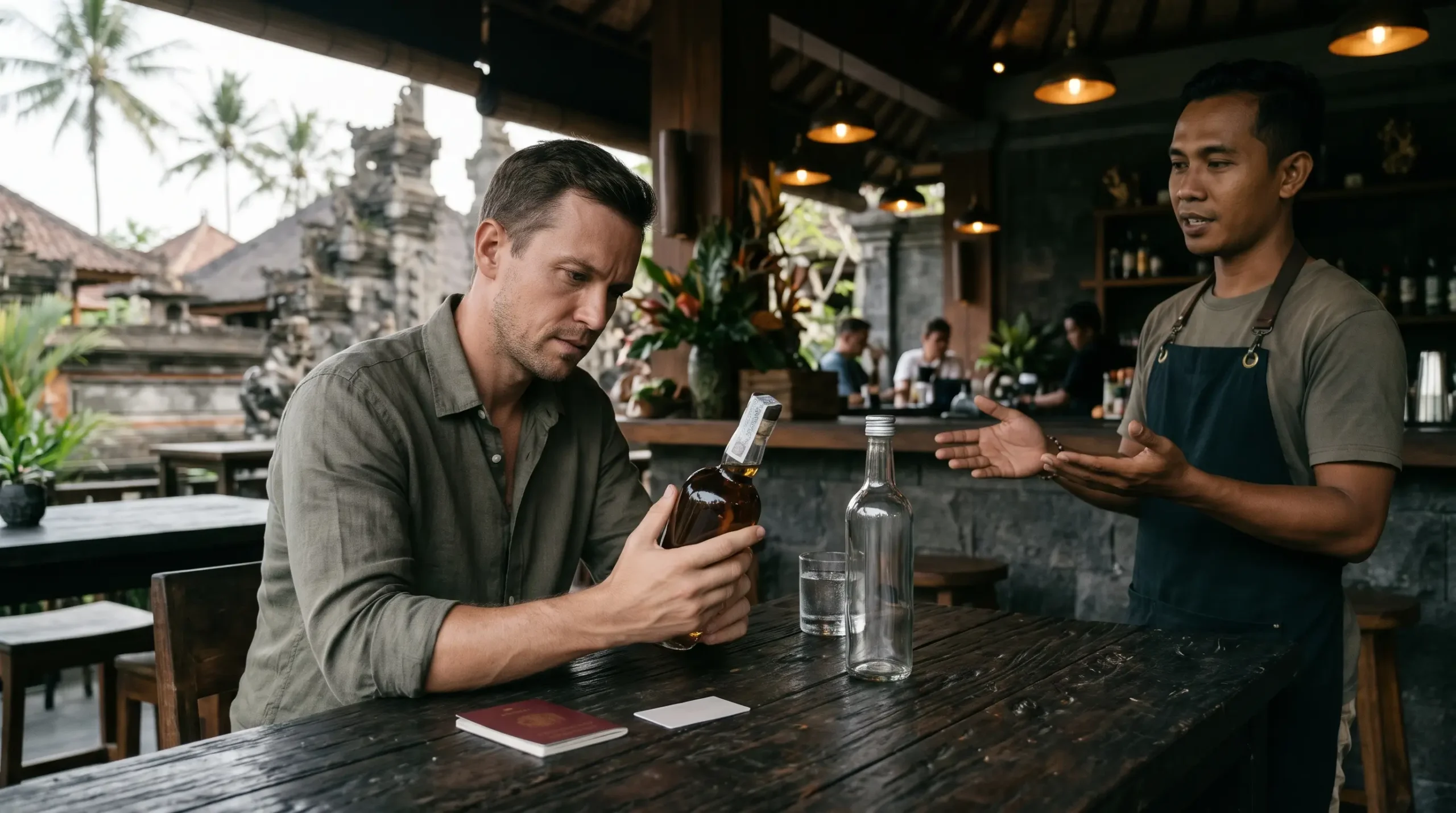
Retailers and hospitality businesses may also apply their own age-verification policies. Some establishments may request identification or a passport before selling or serving alcoholic beverages.
What This Means for Tourists:
Do not assume that the drinking-age rules in your home country apply in Bali. Check the current requirements before purchasing alcohol, and carry valid identification when appropriate.
If you are traveling with younger adults, make sure you understand the applicable restrictions rather than relying on assumptions about local enforcement.
Myth 4: All Locally Produced Alcohol in Bali Is Unsafe
The Myth: All alcoholic beverages produced locally in Bali or elsewhere in Indonesia are dangerous, contain methanol, and cause methanol poisoning.
The Fact: There is an important distinction between legally produced alcoholic beverages and illegally mixed or adulterated alcohol, commonly referred to as oplosan.
Indonesia has locally produced alcoholic beverage brands that operate within the applicable regulatory framework. Products such as Vibe Liqueur & Spirits are examples of locally marketed alcoholic beverage brands.
However, a product’s local origin alone does not determine whether it is safe. Registration, licensing, authenticity, production standards, and proper handling all matter. No alcoholic beverage can be guaranteed to be completely risk-free.
Methanol contamination is a serious concern associated with some illicit or adulterated alcoholic products. Consuming methanol can cause blindness, organ damage, or death.
What This Means for Tourists:
Do not assume that every locally produced alcoholic beverage is dangerous. Equally, do not assume that a product is safe simply because it has attractive packaging or is sold in a tourist area.
Avoid alcohol from unidentified sources, products with suspicious labels, and drinks sold under questionable circumstances. Choose reputable retailers and established venues, and seek medical attention immediately if you suspect methanol poisoning.
Myth 5: Arak Bali and All Local Alcoholic Drinks Are the Same
The Myth: The term arak refers to every type of alcoholic beverage produced locally in Bali, regardless of its ingredients or production method.
The Fact: Arak Bali is just one of several traditional alcoholic beverages associated with the island.
Traditionally, arak is a distilled alcoholic beverage made from fermented palm sap, although ingredients and production methods can vary. Other traditional drinks include:
- Arak Bali: A distilled alcoholic beverage traditionally associated with fermented palm sap.
- Brem: A traditional fermented rice beverage, which can have a sweeter taste depending on its style and production method.
- Tuak: A beverage made from palm sap. Depending on its preparation, it may be consumed fresh or fermented into an alcoholic drink.
These beverages differ in their ingredients, production processes, flavors, and alcohol content.
What This Means for Tourists:
Learning about traditional Balinese drinks can help you appreciate the island’s culinary heritage and local drinking culture.
If you want to try arak Bali or another traditional beverage, ask about its ingredients, production methods, and origin. Purchase products from reputable sources rather than assuming that every drink described as traditional has been produced under the same standards.
Myth 6: Tourists Can Bring Unlimited Alcohol Into Bali
The Myth: Tourists can pack several bottles of their favorite alcoholic beverages in their luggage when traveling to Bali, provided the drinks are intended for personal consumption.
The Fact: Indonesia applies customs regulations to alcoholic beverages brought into the country by international travelers.
The original article cites Minister of Trade Regulation No. 20 of 2021 and states that international passengers are generally allowed to bring up to 2,250 milliliters, or 2.25 liters, of alcoholic beverages per person.
However, customs allowances and import requirements can depend on the traveler’s circumstances and the regulations in force at the time of arrival. The cited allowance should therefore be verified against current official Indonesian Customs guidance before being presented as the applicable limit.
What This Means for Tourists:
Before traveling, check the latest rules for buying alcohol in Bali versus bringing alcohol into the country from overseas.
Review the official guidance from the Directorate General of Customs and Excise to understand applicable allowances, declaration requirements, and potential restrictions.
Do not assume that alcohol purchased duty-free can automatically be brought into Indonesia without being subject to customs rules.
Myth 7: Alcohol Rules in Bali Never Change Throughout the Year
The Myth: Tourists can purchase and consume alcohol in Bali at any time of the year without restrictions on particular dates or religious observances.
The Fact: Alcohol availability and public activities may be affected by certain religious observances, particularly Nyepi, the Balinese Day of Silence.
During Nyepi, the island observes a period of silence and restricted outdoor activity. Normal business operations and public activities are affected, and visitors are expected to respect the observance.
Depending on the applicable official directives and local arrangements, alcohol sales, business operations, and public consumption may also be restricted during religious observances.
The precise requirements should be confirmed through current official announcements rather than assuming that identical restrictions apply everywhere and every year.
What This Means for Tourists:
If you plan to visit Bali during Nyepi, check official announcements well before your arrival.
Arrange your meals and other essentials in advance, follow your accommodation’s instructions, and respect the restrictions on outdoor activities. If your hotel permits guests to remain in their rooms during the observance, follow its guidance and avoid activities that disturb the surrounding community.
Understanding alcohol during Nyepi is an important part of preparing for a culturally respectful visit.
Are Alcohol Rules Different Across Bali?
Although national regulations apply throughout Indonesia, the way alcohol-related rules affect visitors can vary depending on the location and circumstances.
For example, a licensed bar in a busy tourist district may operate differently from a small business in a traditional village. Religious ceremonies, local customary rules, and temporary official directives can also affect activities in particular areas.
Here are several factors worth considering:
- Tourist districts: Hotels, restaurants, bars, and beach clubs may offer alcoholic beverages when authorized to do so and when operating in accordance with applicable regulations.
- Traditional villages: Visitors should be particularly mindful of local customs, community expectations, and any applicable customary rules.
- Religious sites: Drinking should never interfere with religious ceremonies or activities, and visitors should follow posted restrictions and local instructions.
- Religious observances: Nyepi and other significant occasions may involve temporary restrictions or changes to normal business operations.
- Public spaces: Rules concerning public order, traffic safety, and disruptive behavior remain important regardless of whether you are visiting a tourist district or a quieter part of the island.
The key takeaway is that a relaxed atmosphere in one location does not mean that every activity is permitted everywhere.
Before drinking, pay attention to the rules of the establishment, follow local guidance, and check for any temporary restrictions affecting your destination.
What Happens If Tourists Break Alcohol Laws in Bali?
Breaking alcohol-related laws or behaving irresponsibly while drinking can have consequences. The exact outcome depends on the nature of the incident, the applicable law, and the circumstances involved.
Potential consequences may include:
- Fines or other penalties: Certain violations may result in administrative penalties or other sanctions under applicable regulations.
- Traffic-related legal consequences: Driving under the influence can lead to serious legal consequences, depending on the circumstances and applicable traffic laws.
- Problems with local authorities: Public disturbances, disruptive behavior, or violations of official restrictions may result in intervention by local authorities.
- Customary penalties: In communities where relevant customary rules apply, violations may lead to consequences under local practices.
- Customs enforcement: Bringing alcohol into Indonesia in excess of the applicable allowance or failing to comply with customs requirements may result in confiscation or other penalties, depending on the circumstances.
It is important not to assume that being a foreign tourist provides an exemption from Indonesian law.
If you are unsure whether a particular activity is permitted, seek clarification from an official source or a qualified local legal professional rather than relying on informal advice.
The best approach is to understand the relevant rules before drinking, respect local customs, and avoid behavior that could endanger yourself or others.
How to Recognize Fake Alcohol in Bali
Alcohol safety in Bali is an essential consideration for every visitor. Illegally produced, counterfeit, or adulterated alcoholic beverages can pose serious health risks, particularly when their ingredients and production methods are unknown.
To reduce the risk of purchasing fake alcohol in Bali, follow these practical precautions.
1. Check the Excise Stamp and Packaging
Where applicable, examine the bottle’s Indonesian excise stamp, commonly known as pita cukai. Look for signs of tampering, damaged seals, inconsistent printing, or packaging that appears to have been altered.
A genuine-looking stamp alone does not guarantee that a product is authentic or safe, so consider the overall condition of the bottle and its source.
2. Look for Signs of Tampering
Be cautious if you notice:
- A broken or damaged bottle seal.
- Labels that appear poorly printed, inconsistent, or altered.
- Packaging that looks different from the manufacturer’s usual presentation.
- Missing product information or unclear labeling.
- A bottle that appears to have been opened and resealed.
These signs do not independently prove that a beverage is counterfeit, but they justify additional caution.
3. Be Cautious of Unusually Low Prices
A price that seems unusually low compared with similar products may warrant closer scrutiny.
For example, an offer involving premium spirits at a price far below the usual market rate should prompt you to check the establishment’s reputation and the product’s authenticity.
However, price alone cannot establish whether a drink is safe or unsafe.
4. Buy From Reputable Sources
Whenever possible, purchase alcoholic beverages from established supermarkets, authorized retailers, reputable duty-free shops, and licensed hospitality venues.
Avoid drinks from unidentified sellers or products with no clear origin.
5. Never Assume That Appearance or Taste Can Detect Methanol
Methanol contamination cannot reliably be identified by looking at, smelling, or tasting a drink.
If you suspect that a beverage may be contaminated, do not consume it. If you or someone else develops symptoms after drinking alcohol from a questionable source, seek emergency medical assistance immediately.
Methanol poisoning can cause symptoms that initially resemble ordinary intoxication, but it may also lead to severe complications, including visual disturbances, blindness, and death.
The most important alcohol safety rule in Bali is simple: never consume a drink if you have serious concerns about its source or authenticity.
Practical Checklist Before Drinking Alcohol in Bali
Before enjoying alcoholic beverages during your trip, use this checklist to make informed decisions and reduce unnecessary risks.
- Check the latest regulations: Read current official guidance rather than relying exclusively on travel articles published several years ago.
- Understand the legal drinking age in Bali: Verify the applicable age requirements before purchasing or consuming alcohol.
- Choose reputable sellers: Buy from established retailers and consume drinks at reputable hospitality venues.
- Inspect the bottle: Check the seal, packaging, product information, and applicable excise markings.
- Avoid suspiciously cheap alcohol: Investigate products or promotions that appear unusually inexpensive.
- Learn about traditional drinks: Understand the differences between arak Bali, tuak, and brem before trying local beverages.
- Respect religious observances: Check official announcements about alcohol during Nyepi and other relevant occasions.
- Follow local customs: Be mindful of religious sites, community rules, and public behavior.
- Never drink and drive: Arrange safe transportation before consuming alcohol.
- Know the warning signs of poisoning: Seek emergency medical care if methanol poisoning or other serious alcohol-related complications are suspected.
How to Verify Alcohol Regulations Before Traveling
To avoid misinformation, consider the following steps when researching your trip to Bali:
- Check publication dates: Look for recent articles, government announcements, and regulatory updates. Alcohol regulations and customs requirements can change.
- Consult official sources: Refer to relevant Indonesian government agencies, including the Directorate General of Customs and Excise, and official Bali government announcements.
- Distinguish national rules from local practices: Understand the difference between regulations that apply throughout Indonesia and customary rules that may apply within particular communities.
- Treat social media cautiously: Viral videos may exaggerate isolated incidents or omit important details.
- Look for Nyepi announcements: Check relevant communications from the Bali provincial government and Hindu religious organizations before traveling during the observance.
These steps can help you make better-informed decisions and avoid relying on outdated or misleading information.
Enjoying Bali’s Nightlife Safely and Responsibly
Understanding Bali alcohol myths is the first step toward enjoying a memorable and responsible holiday.
Although regulations govern alcohol sales, consumption, imports, and public behavior, Bali continues to offer a wide range of experiences for travelers who want to explore its nightlife and culinary culture.
By understanding the relevant age requirements, checking customs allowances, choosing reputable products, and respecting local traditions, you can explore the island with greater confidence.
For travelers interested in locally produced alcoholic beverages, it is important to choose products from reputable sources and verify their authenticity and regulatory status.
Vibe Liqueur & Spirits is an Indonesian alcoholic beverage brand offering a range of products for different drinking occasions. Its portfolio includes flavors such as Black Tea, Exotic Lychee, and Peach.
These products can be explored by travelers interested in locally marketed spirits and liqueurs. As with any alcoholic beverage, consumers should check the product information, alcohol content, and authenticity before purchasing.
If you are planning your trip and looking for recommendations on places to enjoy Bali’s nightlife, visit Wekendvibe. The platform offers information about entertainment venues, cocktail recipes, and other lifestyle content that may help inspire your travel plans.
Above all, check current information from reliable sources, respect local traditions, and enjoy everything Bali has to offer responsibly.
Frequently Asked Questions About Bali Alcohol Laws
1. Is alcohol illegal in Bali?
No. Alcoholic beverages are legally available in Bali, subject to applicable Indonesian regulations. Visitors should purchase alcohol from legitimate sources, follow relevant age requirements, and respect local restrictions.
2. What is the legal drinking age in Bali?
The original article identifies 21 as the legal drinking age in Bali. However, travelers and publishers should verify the current legal requirements and their specific application against official Indonesian regulations before relying on this figure.
3. How much alcohol can tourists bring into Bali?
The original article cites an allowance of up to 2,250 milliliters (2.25 liters) per international passenger under the regulations it references. Because customs requirements may change and depend on the circumstances, travelers should confirm the current allowance with the Indonesian Directorate General of Customs and Excise before departure.
4. Is arak Bali safe to drink?
The safety of arak Bali depends on its production, authenticity, ingredients, and handling. Choose products from reputable sources and avoid unverified homemade or illegally mixed alcohol.
Traditional origin alone does not guarantee safety. If you suspect that a drink may be contaminated, do not consume it.
5. Can tourists buy alcohol in Bali?
Yes. Alcohol is available through various authorized retailers and hospitality businesses, subject to applicable regulations. Choose reputable establishments and check current local requirements.
6. Is fake alcohol in Bali dangerous?
Yes. Counterfeit or adulterated alcohol may contain methanol or other harmful substances. Methanol poisoning can cause blindness, organ damage, or death. Avoid alcohol from suspicious sources and seek emergency medical assistance if poisoning is suspected.
7. Can tourists drink alcohol during Nyepi?
Nyepi involves restrictions on outdoor activities and normal business operations. The availability of alcohol and any specific restrictions may depend on official directives and local arrangements. Check current announcements before your trip and follow your accommodation’s instructions.
8. Are alcohol laws the same throughout Bali?
National Indonesian regulations apply throughout the country, but local customary rules, religious observances, and temporary directives can affect activities in particular locations. Visitors should check the requirements relevant to their destination and respect local customs.