 Log in
 Register


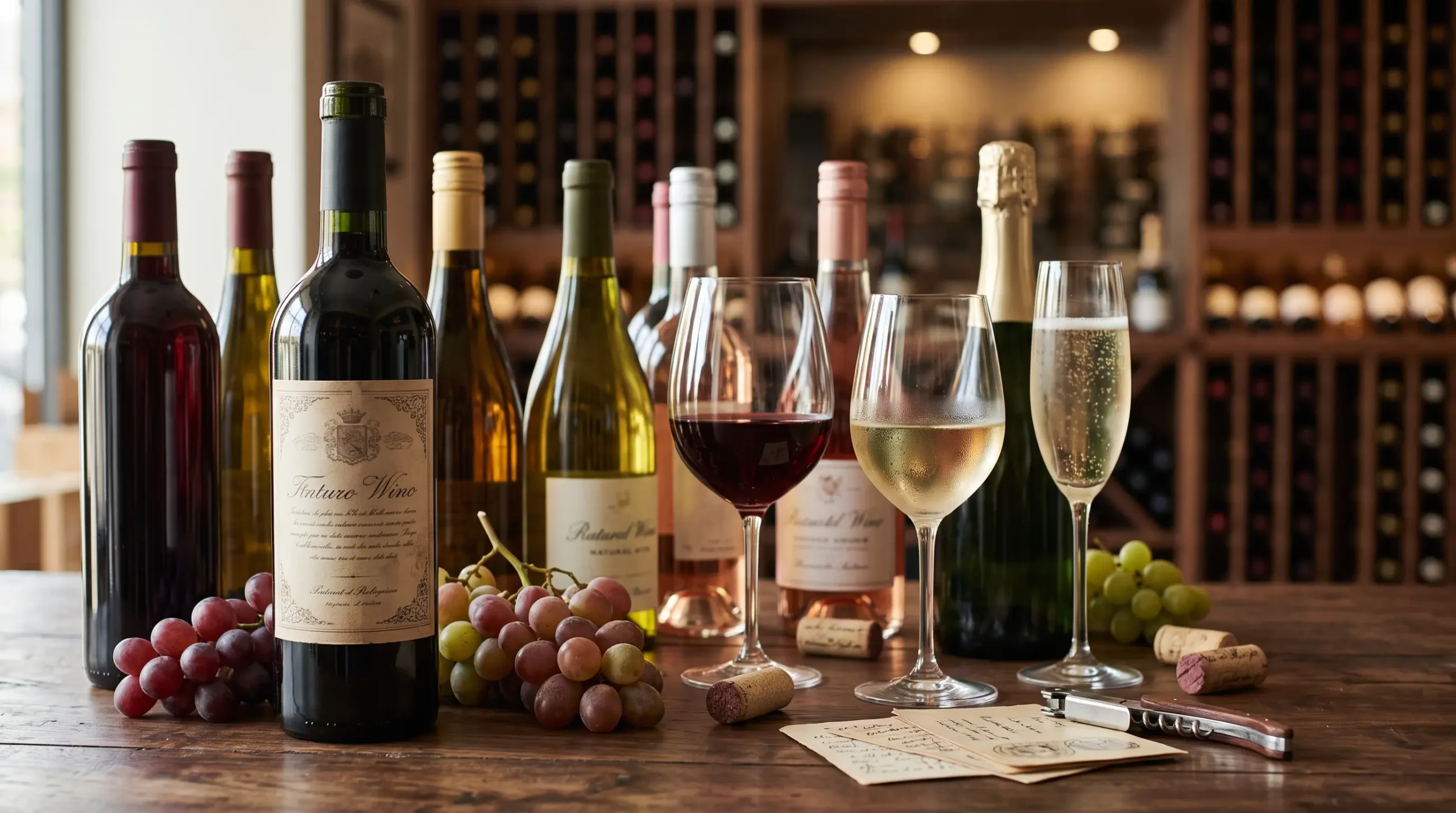
Have you ever felt confused while standing in a supermarket aisle or wine shop, staring at rows of bottles, and not knowing which one to choose? For beginners, wine bottles often look like books in a foreign language. There are producer names, varietals, regions, vintages, alcohol percentages (ABV), appellations, to volumes printed in various font sizes. It is no wonder that in the end, the bottle with the most attractive design or the most affordable price is often the one taken home.
In fact, knowing how to read wine labels is a very useful basic skill. The label on the bottle is actually the “ID card” of the beverage. Understanding several key pieces of information on the label can help the decision-making process to better suit flavor preferences, needs, and the moments you want to create. This article will be a comprehensive guide to learning how to choose wine for beginners, without needing to feel intimidated by complicated terms.
Why is it Important to Understand Wine Labels?
Knowing the meaning of wine labels is not just to look knowledgeable. There are practical benefits that directly impact the experience of enjoying wine, including:
- Knowing the type of wine: Whether it is red, white, rosé, or sparkling.
- Understanding the product character: Provides clues as to whether the taste will be more fruity, dry, or sweet.
- Knowing the alcohol content (ABV): Helps measure the intensity of the beverage.
- Knowing the volume: Important for adjusting portions to the number of people.
- Knowing the product origin: The producing region or country often determines the style of making.
- Knowing the production year (vintage): If listed, this indicates the year the grapes were harvested.
- Understanding producer information: Knowing who makes or imports the wine.
- Avoiding impulsive purchases: Prevents selecting products solely based on aesthetic bottle designs or just an expensive price.
Please note: Labels provide factual product information, but labels alone are not always enough to determine absolute sensory quality (taste and aroma). Quality is a combination of the manufacturing process and the personal taste of the connoisseur.
Parts of the Wine Label to Pay Attention To
To master how to read wine labels, here is an explanation of the elements most commonly found on the front and back of the bottle.
1. Wine Name or Brand
This is the name of the producer or trademark that produces the wine. Sometimes, the brand name is printed the largest (especially in New World style wines). It is important to distinguish between the brand name (for example, “Hatten”, “Penfolds”, or “Yellow Tail”) and the name of the grape variety or its region of origin.
2. Grape Type or Variety
The variety (type of grape) provides the strongest clue regarding the general flavor character. Some popular grape varieties often listed on labels include:
- Cabernet Sauvignon: A red grape with a bold character, high tannins, and dark fruit aromas.
- Merlot: A red grape that tends to be softer and fruity.
- Pinot Noir: A light-bodied red grape with red berry aromas.
- Chardonnay: A white grape that can taste fresh (if unoaked) or creamy and buttery (if it goes through an oak aging process).
- Sauvignon Blanc: A white grape with high acidity, fresh, and citrus or herbal aromas.
- Riesling: An aromatic white grape that can be produced in styles ranging from very sweet to very dry.
- Pinot Grigio: A white grape that is light, crisp, and refreshing.
Varieties do provide a big picture, but the final character is also highly influenced by where the grapes are grown, the climate, production techniques, aging, and the winemaker’s style.
3. Region or Wine Origin
The geographical location where the grapes are grown provides important context regarding the wine’s style. In the wine world, the terms Old World (like France, Italy, Spain, which focus on traditions and regional/appellation rules) and New World (like Australia, the United States, Chile, or even Indonesian local wines, which generally emphasize fruit varieties and innovation) are known.
For example, wine from warm-climate regions like the Barossa Valley (Australia) generally produces riper fruit and slightly higher alcohol compared to cool-climate regions like Burgundy (France). Both have their respective styles, and it cannot be generalized that one region is always better than the other.
4. Vintage / Harvest Year
The wine vintage year is the year the grapes were harvested, not the year the bottle was sold. The harvest year can provide information regarding weather conditions during that season in its region of origin. It is very important to understand: wines with an older vintage year are not automatically of higher quality. In fact, most wines on the market today are designed to be enjoyed while young (1-3 years after harvest).
5. Alcohol by Volume (ABV)
The alcohol content of wine is always listed as a percentage, usually ranging from 5% to more than 15%. For example, 12%, 13.5%, or 14% ABV. The alcohol percentage provides an idea of the intensity and “warmth” (warm feeling in the throat). However, a high ABV is not an indicator of superior quality; it is merely a marker of the conversion rate of the grapes’ natural sugars into alcohol during the fermentation process.
6. Volume / Net Contents
The standard volume for one wine bottle is 750 mL (about 5-6 standard glasses). Other sizes such as a half-bottle (375 mL) or a magnum (1.5 Liters) are also frequently found. Paying attention to packaging size is very important when comparing prices between products on store shelves.
7. Sweetness or Wine Style
These terms indicate the level of residual sugar after fermentation:
- Dry: Contains very little to no residual sugar. A dry taste is often misinterpreted as bitter; whereas this simply means the wine does not taste sweet.
- Off-dry / Semi-dry: There is a slight, light touch of sweetness.
- Semi-sweet: The sweet taste begins to be clearly noticeable.
- Sweet: Very sweet, generally categorized as a dessert wine.
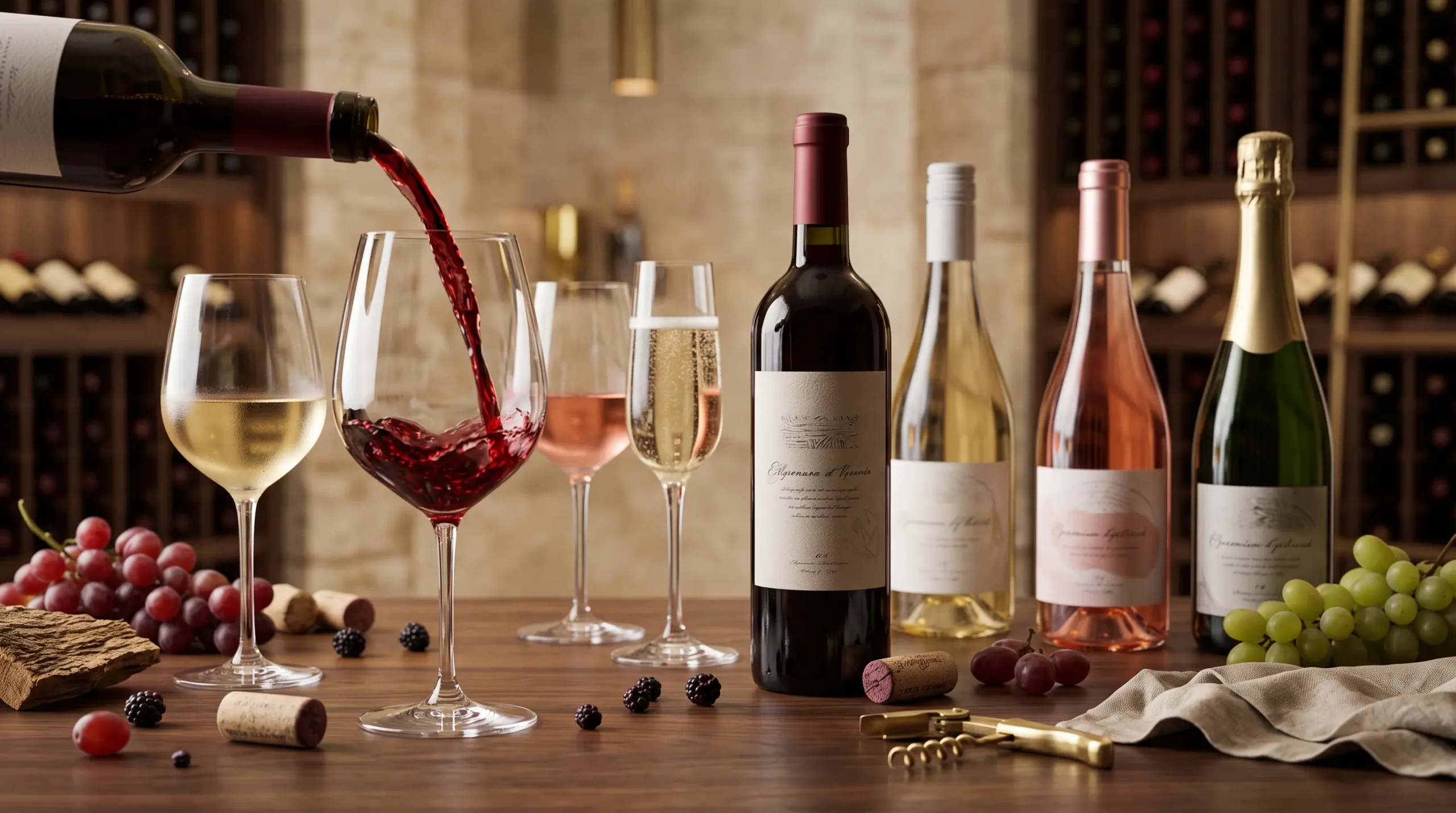
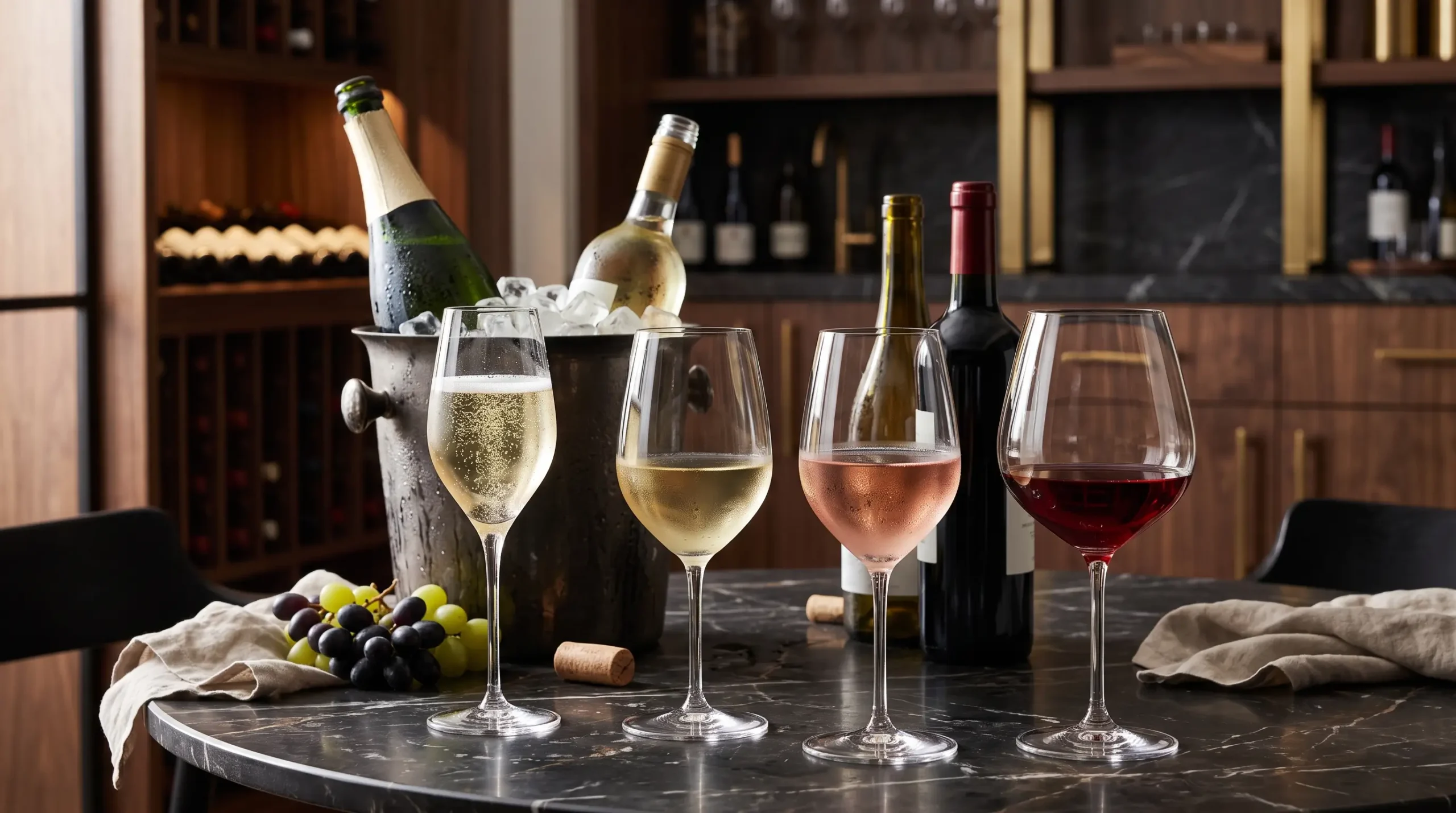
8. Sparkling, Still, Rosé, Red, or White
The most basic categories that determine the form of the beverage:
- Red wine: Made from red/black grapes along with their skins, producing a red color and tannin compounds (providing an astringent/dry texture in the mouth).
- White wine: Made from white grapes (or red grapes without skins), generally refreshing and served chilled.
- Rosé wine: Red grapes whose skins are only briefly steeped, producing a bright pink color and a taste that falls between red and white characters.
- Sparkling wine: Wine that contains carbonation/bubbles (like Champagne or Prosecco).
- Still wine: Regular wine that does not contain carbonation.
How to Read Wine Labels in 30 Seconds
For those in a hurry in the supermarket aisle, use this practical checklist to process label information quickly:
- Step 1: Look at the type of wine (Red, White, Rosé, Sparkling).
- Step 2: Find the grape variety if listed (e.g., Merlot or Chardonnay).
- Step 3: Check the region/origin (helps to see if it is Old World or New World).
- Step 4: Look at the vintage if available (whether it’s a fresh young wine or has been stored for several years).
- Step 5: Check the ABV (measures the concentration/intensity of alcohol).
- Step 6: Pay attention to the sweetness/style (whether it says dry or sweet).
- Step 7: Check the bottle volume (ensure the size is a standard 750 mL or according to needs).
- Step 8: Read producer information and additional labels (including legal/BPOM labels to ensure it is an official product).
How to Choose Wine Based on Taste
Figuring out how to choose wine relies heavily on what the palate likes, not on circulating stereotypes. Here is a brief guide:
- If you like a lighter and fresher taste: Explore white wine (like Sauvignon Blanc or Pinot Grigio) or rosé wine served chilled.
- If you like stronger fruit characters (fruity): Look for New World varieties or those that list tropical fruit or dark berry tasting notes on the back label.
- If you like a non-sweet taste: Pay attention to the term dry on the bottle. Most red wines and many white wines are by default produced in a dry style.
- If you like a sweeter taste: Look for sweetness information like semi-sweet, sweet, or look for specific style names like Moscato.
- If you like a festive carbonation sensation: Consider sparkling wine for celebrations or simply as a mood refresher.
(Note: These categories can generally be good starting choices, but it doesn’t mean they will definitely suit everyone. Taste is highly subjective.)
Are Expensive Wines Definitely Better Quality?
This is one of the biggest myths. Knowing how to determine wine quality means understanding that price is influenced by many operational factors, including:
- Wine origin and land uniqueness (terroir).
- Grape variety and crop yield.
- Production costs and methods (for example, using expensive oak barrels).
- Duration of aging before release to the market.
- Producer reputation and history.
- Distribution, import costs, and alcohol taxes in the destination country.
- Brand positioning and product rarity.
Even though expensive wines often offer flavor complexity from meticulous production methods, price and quality do not always have a one-to-one relationship. It is very possible to find an affordably priced bottle that tastes incredibly suitable to your palate.
Does an Older Vintage Mean a Better Wine?
Many people think wine is like antiques: the older it is, the better. However:
- Not all wine is made for the aging process. The majority of commercial wine is made to be consumed within 1-5 years from the vintage year.
- The vintage on the label only indicates the year the grapes were harvested, reflecting the weather of that year.
- Wine quality cannot be determined solely from the age number. Wine that is stored too long beyond its aging capacity can actually lose its fruit flavor and become flat.
- For wines that are indeed intended for aging (usually highly structured red wines), storage conditions (temperature, humidity, light) strongly determine whether the wine develops well or gets ruined.
Common Mistakes When Buying Wine for Beginners
To make these wine-choosing tips more complete, avoid some mistakes often made by first-time buyers:
- Only choosing based on an aesthetic label design.
- Assuming expensive wine definitely tastes better and suits personal tastes.
- Assuming an older vintage year always means a better taste.
- Assuming a high ABV means higher product quality.
- Not paying attention to sweetness labels (leading to disappointment when expecting sweet but buying something very dry).
- Not reading the grape variety and buying solely because the color matches.
- Not paying attention to the bottle size, thinking you’re getting a very cheap price when it’s only a half-bottle.
- Only following a brand’s popularity without trying other variations.
- Assuming wine from a certain country is always better than wine from another country.
Time to Explore Flavors
Understanding how to read wine labels is ultimately the unlocking key to broader flavor adventures. Armed with the guide above, there is no longer a need for hesitation or mere guessing when choosing a beverage in the store aisle. Use information such as grape variety, sweetness level, and region of origin as a compass to find a flavor profile that truly fits your taste.
However, the exploration of quality beverages certainly does not stop at wine alone. For lovers of Indonesian local alcoholic beverage creations whose quality is globally recognized, be sure to try VIBE Liqueur & Spirits. As a proud local brand that has won various international awards, VIBE Liqueur & Spirits offers a very broad collection of flavor variants with various alcohol contents (ABV). Its dynamic flavor character makes the VIBE product line highly versatile and ideal for mixing into various refreshing cocktail recipes.
Want to know more about the world of mixology and urban lifestyle inspiration? Visit Wekendvibe to get guided recommendations for the best entertainment venues, delicious cocktail recipe mixes you can make yourself at home, and various other unique and up-to-date information regarding beverage culture. Happy exploring and finding your favorite drinks!
FAQ
What should be looked at when buying wine?
Pay attention to the grape variety, region/origin, sweetness level (dry or sweet), ABV, type of wine (red, white, rosé, sparkling), and vintage year if any, to suit your taste preferences.
What does vintage mean in wine?
Vintage refers to the year the grapes were harvested from the vineyard, not the year the wine began to be sold in the market.
Is older vintage wine always better?
No. The majority of wine is designed to be drunk while still young and fresh (1-5 years). Only a small portion of high-quality wine is actually produced with a structure to undergo aging.
What does dry mean on a wine label?
Dry means the wine has very little to no residual sugar after the fermentation process. A dry taste refers to non-sweetness, not bitterness.
What is the difference between red wine and white wine?
Red wine is made from red grapes by including their skins during fermentation (providing red color and tannins), while white wine is fermented without grape skins, producing a clear/yellow color and is generally fresher.
What does grape variety mean on a wine label?
Grape variety is the specific type of grape species used to make the wine, such as Merlot, Chardonnay, or Pinot Noir. Each variety has a different inherent flavor profile.
Is expensive wine definitely quality wine?
Price is influenced by many factors including taxes, import costs, land origin, and wooden barrel costs. Expensive wine is not necessarily tastier to every individual’s palate.
How to choose wine for beginners?
Start by recognizing personal taste preferences (liking sweet, sour, or light). Beginners generally find it easier to enjoy fresh white wine (like Sauvignon Blanc) or fruity and soft red wine (like Merlot) before exploring other types.