 Log in
 Register



For many travelers visiting the Island of the Gods for the first time, one question that almost always comes to mind when looking at a menu at a bar, restaurant, or beach club is: why is alcohol in Bali so expensive? This is especially noticeable when comparing prices with those in their home countries. A bottle of imported spirits or wine in Bali can seem significantly more expensive.
The high price of alcohol in Bali is not simply the result of decisions made by hospitality business owners. Instead, it is the end result of a long and highly regulated supply chain governed by the Indonesian government. Prices are influenced by a combination of alcohol import taxes, import duties, excise taxes, value-added tax (VAT), local taxes, logistics costs, and operating margins.
This article takes an objective look at alcohol tax Indonesia, explaining how the taxation and import systems work and why imported alcoholic beverages can experience a significant price increase before eventually being served in a glass to customers in Bali.
Why Does Alcohol in Bali Feel More Expensive?
Compared with neighboring countries that have free-trade policies or lower taxes on alcoholic beverages, Indonesia has a very different regulatory framework. As a country where the majority of the population does not consume alcohol, regulations governing alcoholic beverages (Minol) and Ethyl Alcohol-Containing Beverages (MMEA) are designed not only to generate state revenue but also to control consumption.
For this reason, the government applies a multilayered control system through fiscal instruments. In other words, the question of why alcoholic drinks are expensive in Bali can largely be explained by the national taxation structure and import quota restrictions in Indonesia, combined with the logistics involved in distributing these products to Bali.
Alcohol Tax Components in Indonesia: From Import Duties to Excise
To understand why alcohol is expensive in Bali, we need to break down the fiscal burden applied to every bottle of imported alcohol. There are four main types of charges that must be paid when importing alcoholic beverages into Indonesia:
1. Import Duty
Import duty (import duty alcohol Indonesia) is a government charge imposed on goods entering Indonesian customs territory. Based on the Indonesian Customs Tariff Book (BTKI) issued by the Ministry of Finance, alcoholic beverages are often subject to relatively high import duties. Depending on the type of beverage, beer, wine, or spirits such as whisky, tequila, and gin, the import duty may use a specific tariff (a fixed amount in rupiah per liter) or an ad valorem tariff (a percentage of the value of the goods), which can reach 90% or more of the customs value.
2. Excise Tax
After import duty, alcoholic beverages are also subject to alcoholic beverage excise. Excise is a government levy imposed on certain goods whose consumption needs to be controlled and whose distribution needs to be monitored. According to regulations from the Directorate General of Customs and Excise (DGCE), MMEA excise rates are divided according to alcohol content:
- Category A: Alcohol content up to 5% (for example, beer).
- Category B: Alcohol content above 5% up to 20% (for example, wine).
- Category C: Alcohol content above 20% up to 55% (for example, vodka, gin, whisky, tequila). The higher the alcohol category, the higher the excise rate charged per liter. Imported products are also subject to different excise rates, which are generally higher than those for domestically produced products.
3. Value-Added Tax (VAT)
Imported goods entering Indonesia are also subject to Value-Added Tax (VAT). Currently, Indonesia’s VAT rate stands at 11% (based on the latest regulations in effect, with an increase to 12% planned in the future in accordance with statutory provisions). VAT is calculated based on the Import Value, which consists of the customs value of the goods, insurance, and freight costs, plus import duties and excise.
4. Local Tax (PB1 / Restaurant & Entertainment Tax)
When the beverage is eventually sold at a restaurant, bar, or nightclub in Bali, the end customer is subject to a 10% Local Tax (previously known as PB1). It is important to note that this is not part of the import tax. Instead, it is a local tax imposed on the provision of food and beverage services by the local government.
The Process of Importing Alcoholic Beverages into Indonesia
Importing alcohol into Indonesia is not a simple process. The government implements an import quota system and only allows companies with specific licenses, such as IT-MB or Registered Importer of Alcoholic Beverages, to bring alcohol into the country.
The process includes licensing from the Ministry of Trade, strict supervision by BPOM (the Indonesian Food and Drug Authority) to ensure consumer safety, and customs clearance at ports or airports by Customs and Excise. The limited number of official importers and annual import quotas restrict the supply of imported alcoholic beverages in the market, which naturally affects the balance between supply and demand and ultimately influences prices.
Hidden Costs Behind a Bottle of Imported Alcohol in Bali
Alcohol taxes in Indonesia may be high, but the cost burden does not end at the port. A series of operating expenses must be covered before a bottle reaches the shelves of a bar in Senopati, Jakarta, or a beach club in Canggu, Bali. These include:
- Shipping, Freight, & Insurance: International logistics and shipping costs, along with insurance for fragile and high-value goods.
- Customs Clearance & Warehousing: Alcoholic beverages require specialized storage facilities under supervision before receiving distribution approval. This creates warehouse rental costs and may sometimes require climate control for wine.
- Domestic Logistics & Distribution Costs: Major distributors are generally based in Jakarta. Shipping alcohol from Jakarta to Bali creates additional inter-island logistics costs.
- Distributor and Retailer Margins: Importers, national distributors, regional distributors in Bali, and retail stores each add a profit margin to cover their business operating costs.
Summary Table: Components That Affect Imported Alcohol Prices
| Cost Component | Description | Type |
| Base Product Price | The original price from the overseas factory or producer. | Variable |
| International Logistics | Freight, insurance, and international shipping. | Additional Cost |
| Import Duty | Government levy when goods enter customs territory. | Central Government Tax |
| Excise (Categories A/B/C) | Levy on controlled goods based on alcohol content. | Central Government Tax |
| Import VAT | Value-added tax on imports (currently 11%). | Central Government Tax |
| Distribution & Warehousing | Domestic logistics (Jakarta–Bali), storage, and clearance. | Business Operations |
| Company Margin | Profit margin for importers, distributors, and retailers. | Commercial Margin |
| Local Tax (PB1) | Restaurant/entertainment tax (10%) when purchased at a venue. | Local Tax |
| Service Charge | Hospitality service fee (typically 5–10% at a venue). | Service Fee |
Bali’s Market Characteristics and Hospitality Industry Prices
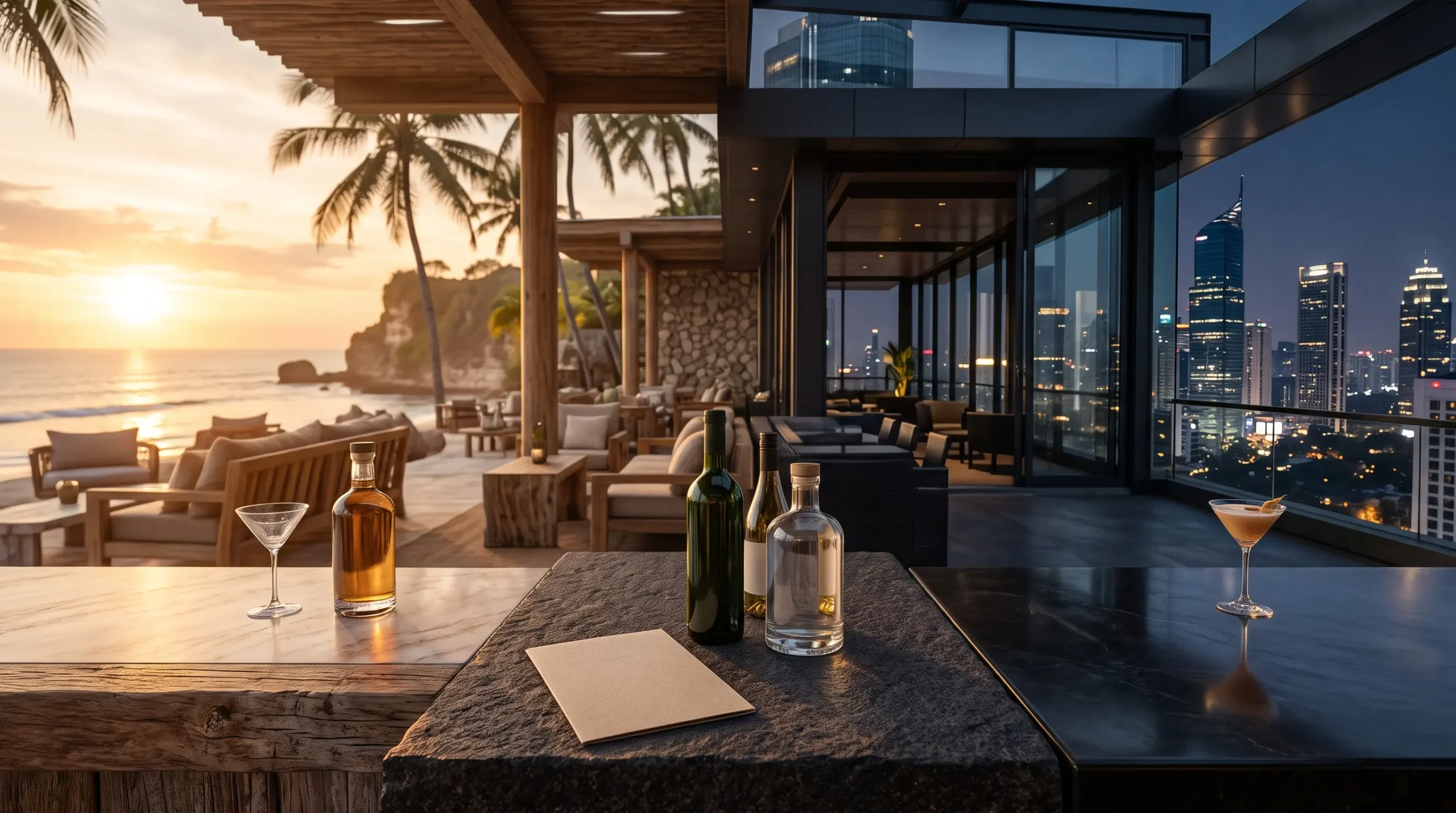
Bali has a very unique market environment. As an international tourism destination, demand for premium-quality alcoholic beverages is extremely high, while the supply of imported products is restricted by import quota regulations.
Many visitors also ask: why can alcohol prices at hotels, beach clubs, bars, nightclubs, and premium restaurants in Bali be significantly higher than prices at liquor stores?
Within the hospitality industry, customers are not simply paying for the liquid inside the bottle. The price also covers:
- Venue Operating Costs: Premium-location rent, such as a cliffside venue in Uluwatu or a beachfront property in Seminyak, staff salaries, expensive alcoholic beverage sales licenses, and maintenance costs.
- Experience & Aesthetics: International DJs, ambience, crystal glassware, high-quality clear ice, and mixers/garnishes used for cocktails.
- Service Charge & Local Tax: Menu prices generally exclude the 10% Local Tax and 5–10% Service Charge.
Price Differences: Local vs. Imported Alcohol
Does all alcohol in Bali incur import taxes? No. It is important to distinguish between imported and locally produced products.
- Local Alcohol (Bali Arak, Tuak): Traditional beverages produced by local artisans. They are generally more affordable because they use locally sourced ingredients and do not go through a long import supply chain. The Bali government currently supports the legalization and standardization of Bali Arak.
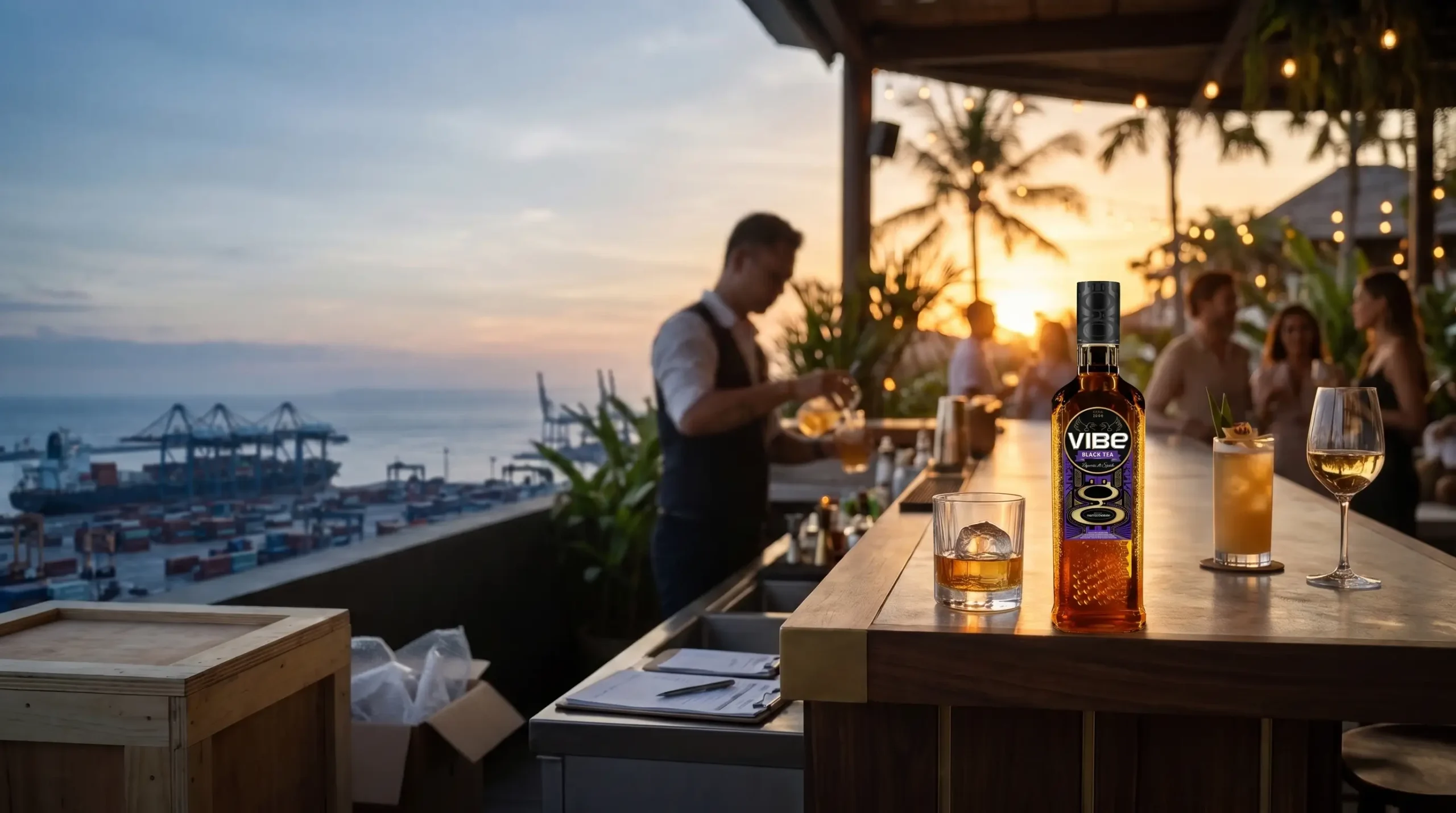
- Locally Produced Beer & Spirits: Beer or spirits produced in Indonesia are not subject to import duty, but they are still subject to domestic excise and VAT. Because their supply chains are domestic, their prices are generally more affordable. One notable example is VIBE Liqueur & Spirits, a proudly Indonesian local alcohol producer whose quality has gained international recognition. Although produced domestically, VIBE Liqueur & Spirits follows international production standards and has won various prestigious awards at global spirit competitions. This demonstrates that travelers and local consumers do not always need to rely on imported spirits to enjoy a premium drinking experience.
The VIBE range is also extensive, from essential base spirits such as Vodka, Rum, and Dry Gin with distinctive character, to aromatic liqueurs such as Black Tea, Exotic Lychee, Triple Sec, and Peach offering a balance of natural fruit sweetness and enticing aromas. - Imported Spirits & Wine: Produced overseas and imported into Indonesia in full. This category is fully affected by alcohol import tax Indonesia, import duties, and high import excise rates.
- Premium / Ultra-Premium Spirits: Rare imported beverages, vintage wine, or aged whisky. In addition to high taxes, exclusive venue hospitality margins can cause their prices to rise dramatically.
Imported Alcohol Price Increase Simulation (Illustration)
Note: The figures below are only a simplified conceptual simulation intended to make the pricing process easier to understand. They are not actual or legally applicable government tariff calculations.
Imagine a bottle of imported whisky purchased from an overseas distillery for $50 USD (approximately Rp 750,000).
- After entering Indonesia, the product is subject to Import Duty and Excise. Depending on the applicable specific rates, the base value could increase by 100% to 150%. The cost becomes approximately $120.
- After adding 11% VAT and international logistics costs, the landed cost could reach $140.
- The importer and regional distributor add margins to cover operations, warehousing, and distribution. The retail price at a liquor store in Bali could become $200.
- If the bottle is placed on the menu of a premium beach club, the venue needs to cover operating costs (overhead) and risk, bringing the menu price to $400.
- When the guest pays, the bill includes a 10% Local Tax and 10% Service Charge, bringing the total paid by the customer to $480.
This illustration clearly shows how a $50 bottle of whisky can become nearly ten times more expensive when served at the table of an exclusive nightclub in Bali.
Buying Alcohol at Duty-Free: Is It Always Cheaper?
Many international and domestic travelers plan to purchase alcohol at airport duty-free shops. So, is duty-free alcohol in Bali cheaper?
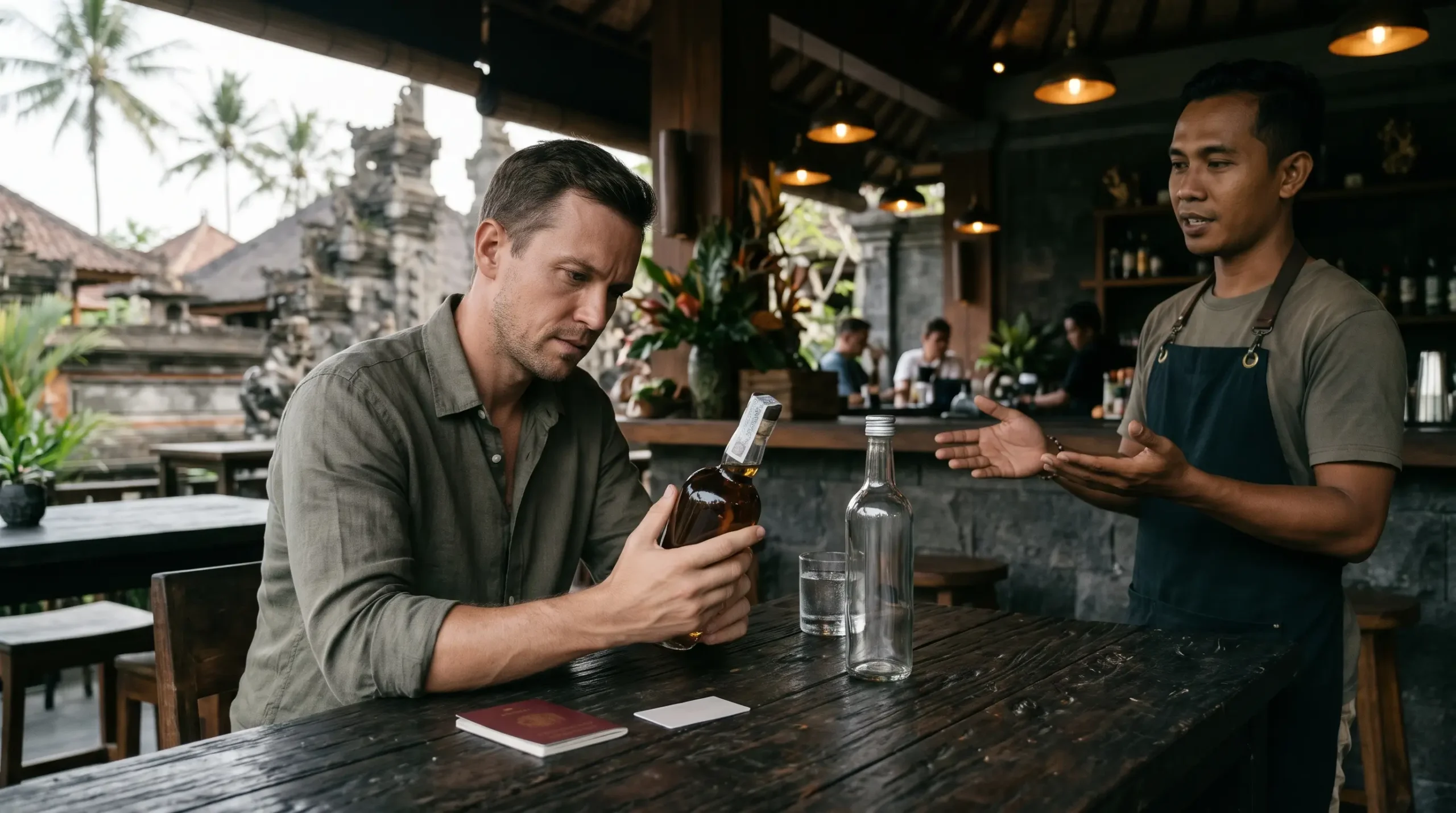
Yes. Alcohol sold in the international arrival duty-free area is not subject to import duties and import excise, meaning its price is closer to international prices. However, the Indonesian government imposes strict limits on the amount travelers can bring into the country. Under applicable customs regulations, each adult passenger arriving from overseas is allowed to bring a maximum of 1 liter of alcoholic beverages.
If a traveler brings more than 1 liter, Customs and Excise authorities may confiscate and destroy the excess at the location, without offering the option to pay taxes on the additional quantity. Therefore, duty-free can be a good option, but it is limited in quantity.
Tips for Enjoying Alcohol in Bali on a Budget
To understand and manage Bali alcohol prices realistically, here are several tips that can help while staying within applicable regulations:
- Explore Locally Produced Spirits: As discussed above, choosing quality products made domestically is one of the best ways to avoid high import taxes.
- Try Premium Bali Arak: Explore Bali’s cultural heritage by trying cocktails made with legally certified Bali Arak.
- Take Advantage of Happy Hour Promotions: Almost all bars and restaurants in Bali offer Happy Hour or Buy 1 Get 1 promotions, typically in the afternoon before sunset.
- Buy from an Official Liquor Store: If you plan to drink at a villa with friends, purchasing a bottle from an official liquor store or supermarket in Bali is generally much more affordable than ordering bottle service at a nightclub.
- Use Your Duty-Free Allowance: If you are flying internationally to Bali, make the most of the legal 1-liter allowance per person.
Smart Ways to Enjoy Premium Alcohol in Bali
Ultimately, the high price of imported alcohol in Bali is not an unexplained mystery. It is largely the result of Indonesia’s national fiscal regulatory structure, including high import duties, layered import excise taxes, import quota restrictions, inter-island logistics, and the world-class operating costs associated with premium hospitality venues across Bali.
However, these strict tax regulations also create an opportunity for the growth of a world-class local alcoholic beverage industry. Enjoying Bali does not always have to mean spending a huge amount of money. As a smart alternative, Vibe Liqueur & Spirits offers premium-quality drinks without the burden of import taxes. As an Indonesian local alcohol brand that has won various international awards, VIBE offers a comprehensive collection of products.
With a wide range of flavors and varying alcohol levels, VIBE products are highly versatile and perfect for creating a variety of signature cocktails, offering a premium drinking experience comparable to global brands.
To complete your lifestyle and entertainment experience, don’t forget to keep visiting Wekendvibe. Discover recommendations for the best venues to relax, inspiring cocktail recipes you can make yourself using quality local products, and various unique insights about the world of hospitality and nightlife.
Enjoying Bali can now be more rewarding, smarter, and still premium!
FAQ (Frequently Asked Questions)
Why is alcohol in Bali so expensive?
Alcohol in Bali is expensive due to multiple layers of taxes imposed on imported products, including import duties, excise, VAT, and local taxes, combined with long logistics and distribution chains and the high operating costs of the hospitality industry.
Is alcohol in Bali subject to import tax?
Yes, but only for alcoholic products imported from overseas. Alcoholic beverages produced domestically, such as local beer, local spirits, and arak, are not subject to import tax or import duties. Instead, they are subject to domestic excise and VAT.
How much is alcohol tax in Indonesia?
Alcohol taxation in Indonesia consists of several layers: import duty, which can reach 90% or use a specific rate per liter; excise, which varies according to alcohol category; 11% VAT; and a 10% local tax when alcohol is consumed at a restaurant or bar.
Are imported alcoholic beverages more expensive than local alcohol?
They can be significantly more expensive. Imported alcohol carries international customs and import-related costs, while locally produced alcohol does not incur import duties and instead is subject to domestic excise and VAT.
Is duty-free alcohol in Bali cheaper?
Yes. Purchasing alcoholic beverages from a duty-free shop at an international arrival airport can be cheaper because they are exempt from import duties and import excise. However, Indonesian Customs and Excise regulations strictly limit passengers to a maximum allowance of 1 liter per person.