 Log in
 Register

The craft spirits and local alcoholic beverage industry in Indonesia is currently experiencing very rapid development. From the revival of ancestral recipes of the archipelago to the birth of modern craft distilleries producing international standard beverages, appreciation for Indonesian local spirits is growing higher. However, along with the growing choices in the market, there is one crucial aspect that every consumer must understand: alcohol content or Alcohol by Volume (ABV).
Understanding alcohol content before consuming a beverage is not just a formality, but a fundamental step in building consumer literacy and a safe drinking culture. ABV information on product labels is the primary guide for measuring a beverage’s strength, understanding its flavor profile, and most importantly, ensuring that every decision to enjoy a drink is made with full awareness and responsibility.
What is ABV (Alcohol by Volume)?
Understanding the Definition of ABV and International Standards
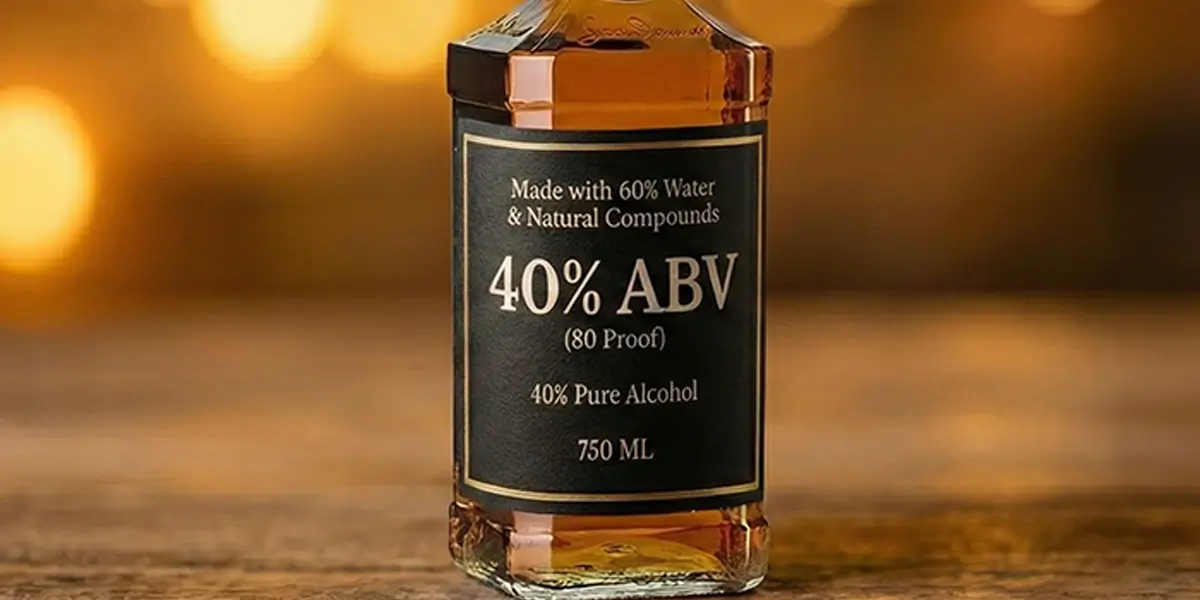
Alcohol by Volume (ABV) is a global standard metric measurement used to indicate how much pure alcohol (ethanol) is contained in a given volume of liquid at a specific temperature (usually measured at 20°C). ABV is expressed as a percentage. For example, if a bottle of local spirit is labeled as 40% ABV, it means that 40% of the total liquid inside the bottle is pure alcohol, while the remaining 60% is water and other flavoring compounds.
This ABV standard is internationally recognized and used by various health and food safety authorities, including BPOM RI (Indonesian FDA), because it provides the most accurate, objective, and transparent measurement for consumers.
How to Read the ABV Percentage on Product Labels
Reading the ABV percentage is very simple yet crucial. On every legal bottle of alcoholic beverage, the ABV figure is always clearly stated, usually close to the bottle’s net volume information (for example: 750ml, 40% ALC/VOL). Keep in mind that ABV refers to a ratio, not an absolute measurement. The amount of pure alcohol that enters the body depends on the ABV percentage multiplied by the volume of the beverage consumed.
Why is Understanding ABV Important?
Knowing the ABV level of a beverage provides various important benefits for consumer literacy:
- Helps Identify Beverage Characteristics: Beverages with a higher ABV generally provide a stronger warming sensation (often called alcohol burn or bite) on the tongue and throat.
- Helps Regulate Responsible Consumption: By knowing the strength of the liquid in the glass, consumption portions (like standardizing a single shot) can be controlled so as not to exceed the body’s safe limits.
- Makes it Easier to Compare Different Spirit Categories: ABV helps categorize whether a product is classified as a liqueur (usually sweeter with 15-30% ABV) or hard liquor (generally 37.5-40% and above).
- Increases Consumer Literacy: Understanding labels keeps consumers away from illegal products that do not transparently state their content information.
What is the Alcohol Content of Indonesian Local Spirits?
The alcohol content of Indonesian local spirits varies greatly, depending heavily on the type of beverage, production techniques, and regulations. Traditional beverages that are now legally produced and certified usually have highly precisely measured alcohol contents. Below is a breakdown of several proud spirit categories of the archipelago.
Note: The figures presented are general ranges. Always refer to official product labels or BPOM data for accurate ABV percentages.
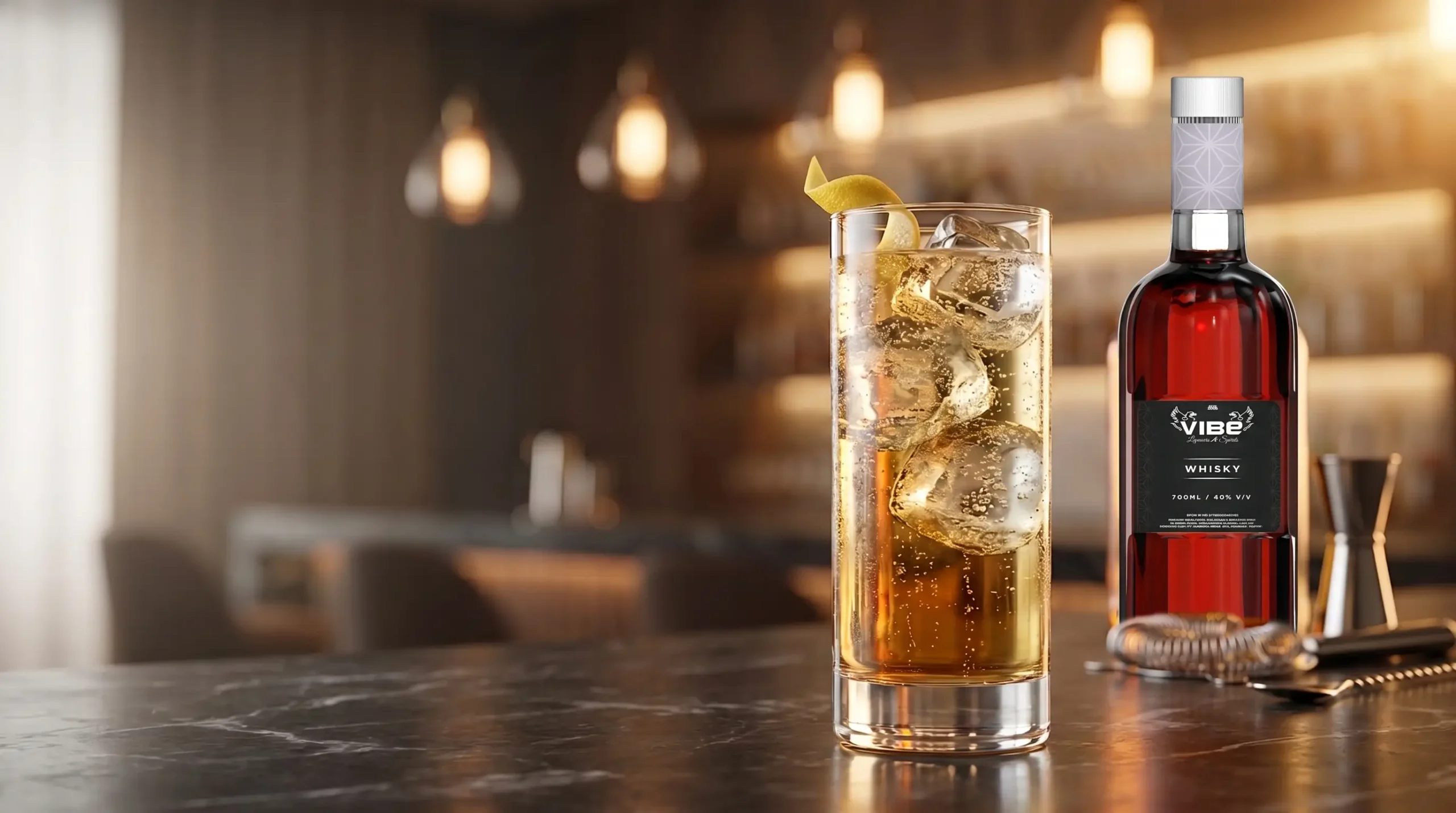
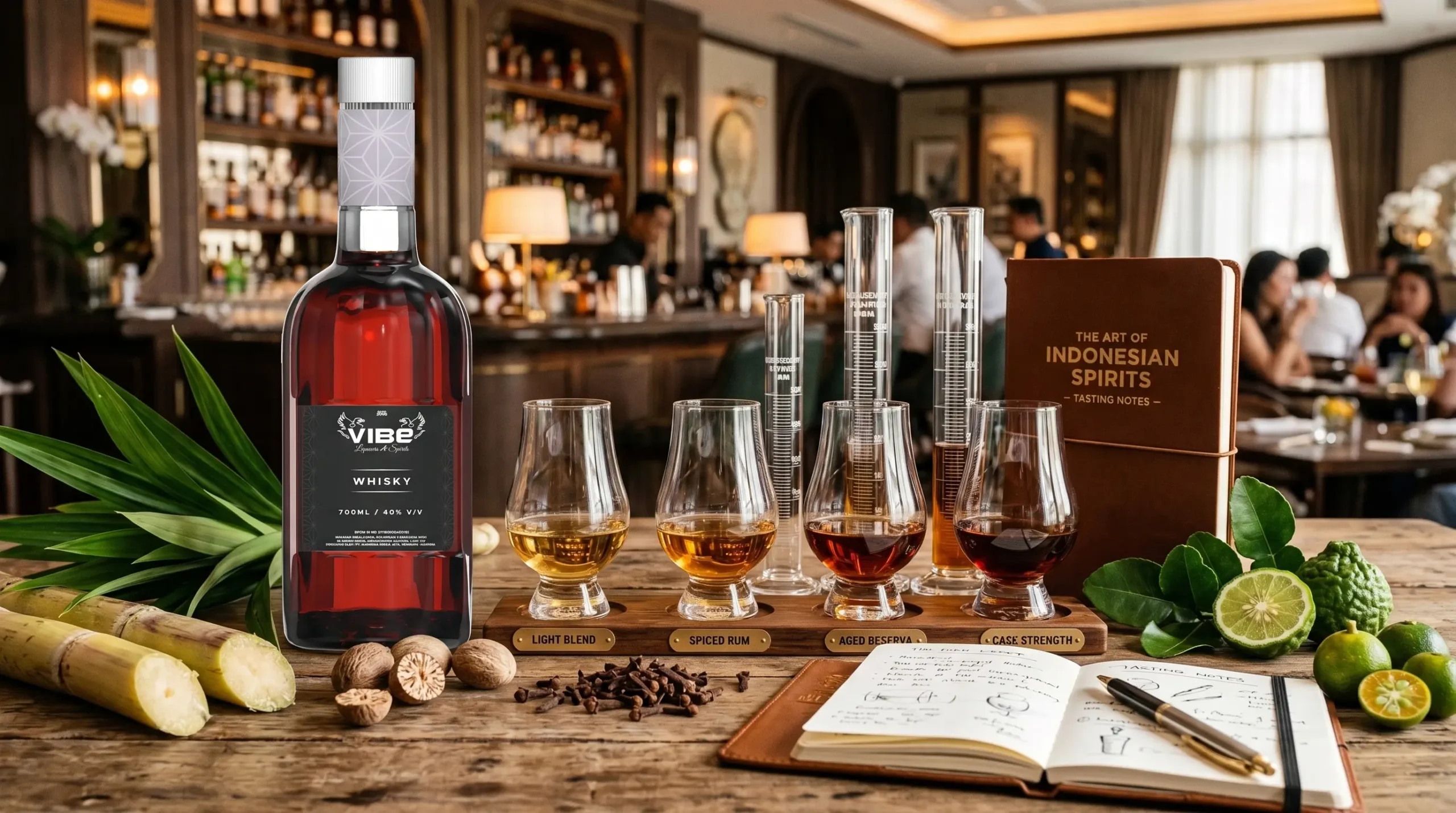
Vibe Liqueur & Spirits: International Standards from Within the Country
As one of the pioneers in the modern local spirit industry, Vibe Liqueur & Spirits offers a comprehensive range of products, from the liqueur category (such as tea and fruit variants which are generally in the 20% ABV range) to hard liquor (such as Vodka, Rum, and Gin with around 40% ABV).
The main advantage of these products is the level of distillation precision that produces global quality. Vibe Liqueur & Spirits has proven that Indonesian local alcohol can dominate global competition by winning various prestigious awards, including:
- Ultimate Spirits Challenge (USC) 2020 (New York): Achieved extraordinary scores for Vibe Rum (92) and Vibe Dry Gin (92), followed by Vibe Black Tea (89), Vibe Exotic Lychee (86), Vibe Vodka (86), and Vibe Triple Sec (85).
- Asia International Spirits Competition 2019: Won 6 awards simultaneously and was crowned Brand of The Year 2019.
- The Liqueur Masters Asia 2019: Bagged the Silver Award for Vibe Exotic Lychee and Vibe Peach.
- The World Gin Masters Asia 2019: Won an international award for the quality of Vibe Dry Gin.
This series of achievements is tangible proof that the literacy of alcoholic beverage production in Indonesia has reached a point where quality, ABV precision, and flavor profiles can stand alongside multinational brands.
Arak Bali
Arak Bali is a distilled spirit generally made from coconut sap, lontar palm sap, or red rice. After receiving strong legal backing and certification, commercial Arak Bali circulating in the market is usually calibrated in the range of 30% to 40% ABV. A slow distillation process produces a warm flavor profile with a distinctive earthy aroma.
Cap Tikus
Originating from Minahasa, North Sulawesi, Cap Tikus is produced through the distillation of sugar palm sap. For Cap Tikus products that have been legalized and entered the commercial realm, producers usually set the alcohol content between 30% to 45% ABV, adjusted to national consumption safety standards.
Sopi
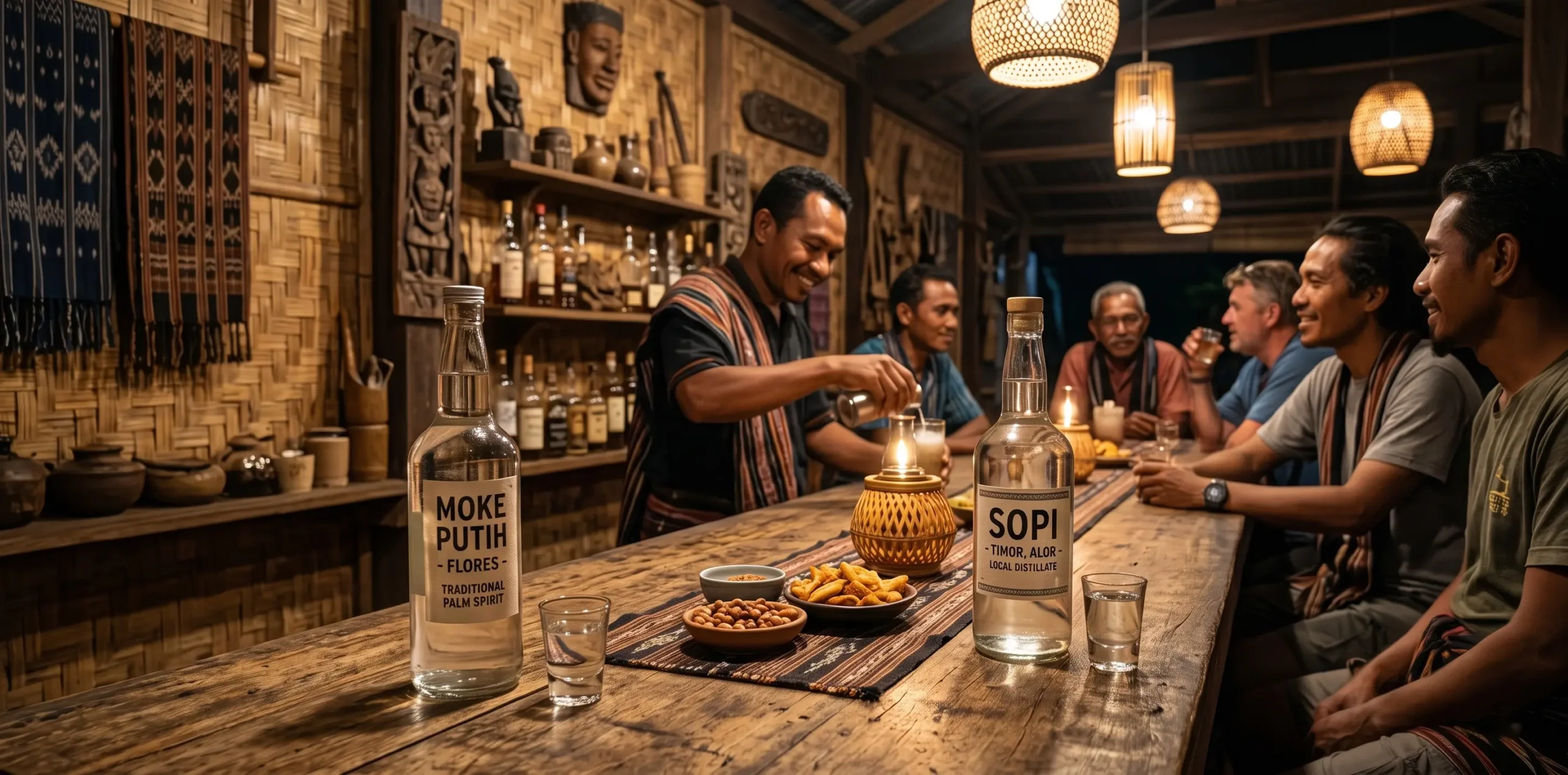
Sopi is a traditional beverage from the Maluku Islands and East Nusa Tenggara, also made from sugar palm or enau sap. Although traditionally the alcohol content can be uncertain due to home-based distillation processes, modern and licensed Sopi usually targets numbers between 30% to 40% ABV.
Ciu
Ciu, widely found in Central Java areas (like Bekonang), is generally made from molasses (sugarcane drops). In its commercial and legal versions, Ciu typically has a range of 25% to 35% ABV.
Brem Bali
Unlike distilled spirits, Brem Bali is more like rice wine or a fermented product of glutinous rice. Because it only goes through a fermentation process without distillation, its alcohol content is much lower, generally in the range of 5% to 15% ABV.
Educational Table: Comparison of Indonesian Local Spirit ABVs
| Spirit Type | Region of Origin / Producer | ABV Range* | Main Ingredients | Flavor Characteristics |
| Arak Bali | Bali | 30% – 40% | Coconut/lontar sap, rice | Earthy, warm, faint coconut aroma |
| Cap Tikus | Minahasa, North Sulawesi | 30% – 45% | Sugar palm sap | Bold, punchy, slightly sweet finish |
| Vibe Liqueur & Spirits | Indonesia | 20% – 40% | Varies (according to liquor/liqueur variant) | Premium, precise, international standard |
| Sopi | Maluku, NTT | 30% – 40% | Sugar palm/enau sap | Aromatic, slightly smoky |
| Ciu | Central Java | 25% – 35% | Molasses (sugarcane drops) | Sweet, light texture |
| Brem Bali | Bali | 5% – 15% | Glutinous rice | Sweet, mildly sour, fruity |
| Local Rum | Various regions | 37.5% – 45% | Molasses / sugarcane juice | Caramel, spices, vanilla |
| Craft Gin/Vodka | Bali, Jakarta, etc. | 40% – 45% | Various agricultural products | Dry, precise, botanical |
(Note: ABV ranges may vary depending on the producer, production methods, and applicable food regulations. Always be sure to check the bottle label before consuming).
Factors Affecting Alcohol Content
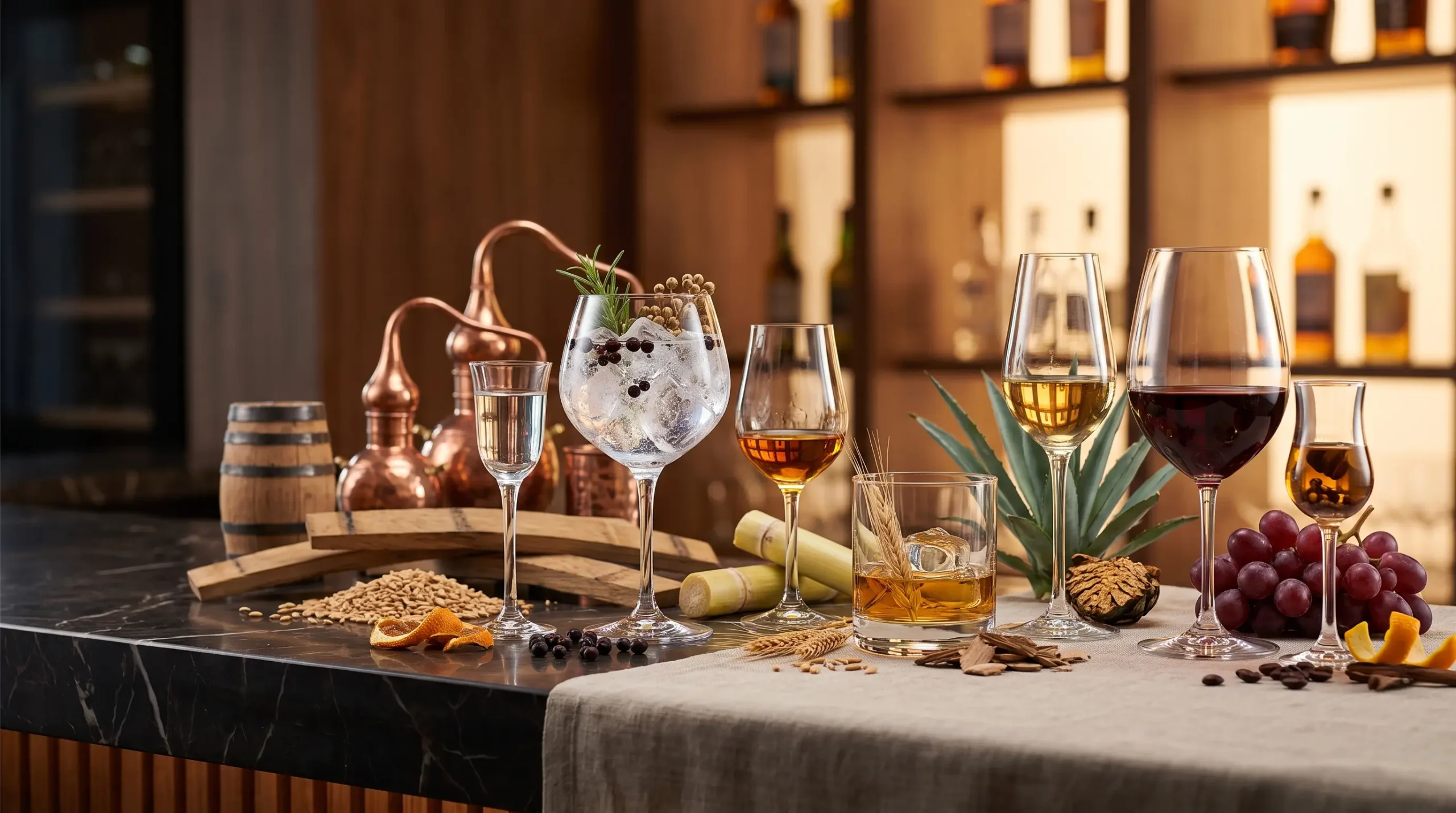
The alcohol content of a beverage does not just happen; the ABV figure is the final result of a process of art and science at the distillation facility. Several main factors determining it include:
- Raw Materials: The level of natural sugar content in raw materials (such as sap, molasses, or rice) largely determines the initial alcohol potential. More sugar means more food for the yeast.
- Fermentation: The process where yeast eats sugar and converts it into alcohol and carbon dioxide. Fermentation can only produce an ABV of up to about 15-20% before the yeast is killed by the alcohol it produces itself.
- Distillation: This is the key to creating spirits. The fermented liquid is heated. Because alcohol has a lower boiling point than water (around 78.3°C), alcohol vapor will rise first, then be captured and condensed back into a liquid with a much higher ABV.
- Number of Distillations: The more often a liquid is distilled (double or triple distilled), the purer and higher its alcohol content.
- Blending and Dilution Process: Most spirits that come out of the distiller have a very high ABV (can reach 70-80%). Therefore, producers will add pure water (cutting with water) to lower the alcohol content to an ideal drinking level and according to commercial regulatory standards (for example, 40% ABV).
How to Read Alcoholic Beverage Labels
Choosing safe alcoholic beverages requires carefulness in reading labels. Legal commercial product labels are required to include:
- ABV Information: Always printed in percentage (%) form.
- Bottle Volume: Indicates the total liquid, for example, 700ml or 750ml.
- Distribution License Number (BPOM RI MD/ML): This is an absolute requirement that proves the product is legal, clinically tested, and safe for consumption. Never buy a product without an excise tape or BPOM license.
- Producer and Region of Origin: Indicates transparency of the beverage’s origin.
- Safety Information: In the form of health warnings from local authorities.
Understanding the Difference Between ABV and Proof
Besides ABV, another term often heard in the beverage world, especially on imported products from the United States, is proof. Proof is an old measurement system originally used by British sailors to test alcohol content.
In the modern era (especially US standards), the proof value is exactly double the ABV percentage.
- If a product has 40% ABV, then the product is 80 Proof.
- If a bottle says 100 Proof, then the alcohol content is 50% ABV.
Although the industry standard in Indonesia uses the more transparent ABV percentage system, understanding the term proof is useful when exploring global craft spirits literature or products.
Responsible Drinking: Why Does ABV Need to Be Understood?
Knowing the alcohol content of Indonesian local spirits is the first step towards responsible drinking practices. Principles that must always be applied include:
- Avoiding Excessive Consumption: By knowing that one shot glass of Arak Bali (40% ABV) has roughly the same amount of pure alcohol as one full can of beer (5% ABV), the pace of drinking (pacing) can be managed more wisely, often interspersed with drinking water regularly.
- Not Driving After Consuming Alcohol (Don’t Drink and Drive): High alcohol levels in the blood affect reflexes, vision, and decision-making. Your own safety and that of other road users is an absolute priority.
- Only Consuming Legal and Licensed Products: Health tragedies often occur as a result of consuming illegal mixed beverages (oplosan) containing toxic methanol. BPOM-labeled local products ensure that the liquid inside the bottle is ethanol processed according to food safety standards.
- Obeying Age Limits and Medical Conditions: Alcoholic beverages are strictly prohibited from being consumed by underage individuals (21 years old in Indonesia), pregnant women, as well as individuals with certain medical conditions who are undergoing treatment.
Myths and Facts About Alcohol Content
- Myth: Higher ABV means the beverage has a better quality.
- Fact: Beverage quality is determined by raw materials, the fermentation process, cleanliness of distillation equipment, and the skills of the maker (master distiller), not just a high percentage of alcohol.
- Myth: All traditional arak has intoxicating and dangerous alcohol content.
- Fact: Illegal and unstandardized arak does have a high risk. However, legal arak overseen by BPOM has an ABV percentage that is consistent, measurable, and safe as long as it is consumed responsibly.
- Myth: A smooth and light taste means the beverage is low in alcohol.
- Fact: Exceptionally well-distilled and high-quality beverages often do not cause a burning sensation in the throat, even if they have a standard ABV of 40%. Evaluation should always be based on the numbers on the label, not the sensation in the mouth (mouthfeel).
Enjoying Archipelago Local Spirits Responsibly
Knowing the answer to the question about the alcohol content of Indonesian local spirits is an important part of consumer literacy. With ABVs generally ranging between 30% and 45%, traditional beverages like Arak Bali and Cap Tikus, to international-standard premium craft spirits, offer strong, safe, and authentic characteristics. Appreciating the cultural heritage and craft spirits industry of the archipelago must always go hand-in-hand with safety. Always read labels, check distribution licenses, understand ABV percentages, and practice responsible drinking in every celebration.
As a premier choice for Indonesian local alcohol that has won various international awards, Vibe Liqueur & Spirits offers a variety of flavors with varying levels of alcohol content to meet the preferences of every connoisseur. The premium distillation quality and rich flavor profiles make these products highly versatile and ideal for application into various global-standard cocktail recipes.
To explore further into the world of mixology and beverage culture, visit Wekendvibe to get venue recommendations, exclusive cocktail recipe inspiration, and various other unique educational and relevant information.