 Log in
 Register


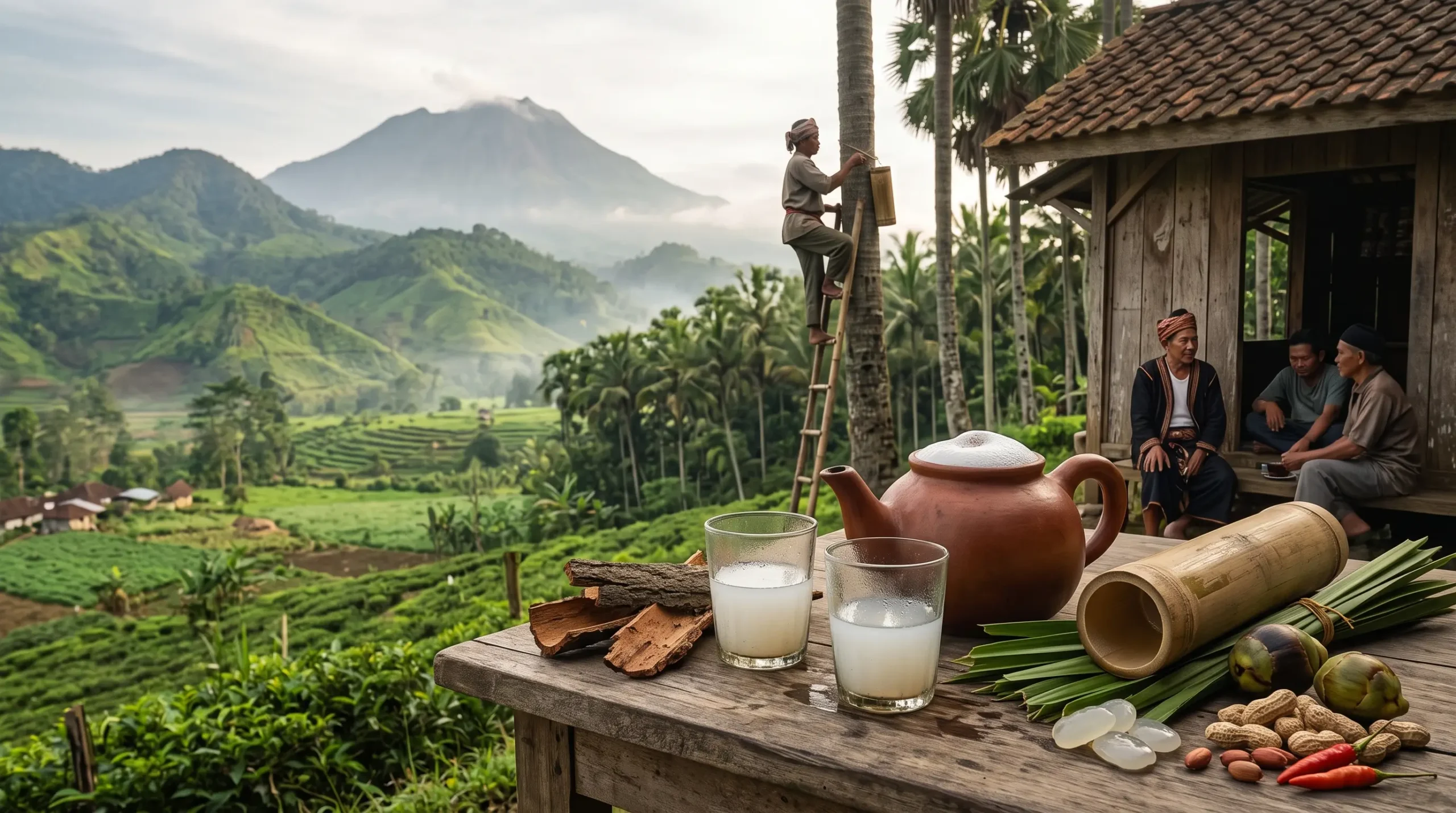
North Sumatra is not just a destination with stunning natural landscapes. Behind the majesty of Lake Toba, the cool air at the foot of Mount Sibayak, and the expanse of green fields in the highlands, lies a highly complex cultural and culinary wealth. Discussing North Sumatra tourism would not be complete without delving into the traditions of its indigenous people, including its culinary heritage. One element that frequently invites curiosity from both domestic and foreign tourists is tuak, a fermented drink that has long been rooted in the agrarian life of the local community.
As part of Karo’s culinary specialties and North Sumatra’s cultural landscape, the existence of tuak offers more than just taste. It is a social medium, a stress reliever for farmers, and in various contexts, acts as a witness to the dynamics of the indigenous community. This article will invite you to trace the footsteps of Tuak Karo, understand its position amidst the diverse Batak ethnic groups, and how you as a tourist can interpret this traditional drink as a bridge to deeper cultural understanding.
What is Tuak Karo?
In general, tuak is a traditional drink of North Sumatra (and several other regions in the Archipelago) produced from the fermentation of sweet sap or nira tapped from the flower bunches of the sugar palm tree (Arenga pinnata). In the context of Tuak Karo, this term refers to the tuak drink that is produced, consumed, or becomes part of the daily life of the ethnic Karo community inhabiting the highlands of Karo Regency and its surroundings.
Tuak is classified as a traditional alcoholic beverage. Its alcohol content varies naturally, depending on the length of fermentation time and the production technique. In Tanah Karo, sugar palm trees thrive in hilly areas and forest edges, making it one of the natural resources familiar to the local community. Although often sheltered under the large umbrella of “Batak traditional drinks”, it is important to understand that its use, social value, and frequency of presence in traditional events can differ from one sub-ethnic group to another.
Origin and History of Tuak in North Sumatra
Tracing the history of tuak in North Sumatra requires a very careful approach, especially because the “Batak” cultural landscape is not a single monolithic entity. Toba, Karo, Simalungun, Pakpak, Mandailing, and Angkola have unique historical roots and traditions.
The practice of tapping sugar palm has been going on for centuries in the Archipelago as a way for prehistoric to traditional societies to utilize forest products. In North Sumatra, documentation regarding tuak is very closely attached to the Toba Batak culture. Much academic research from local universities richly documents how the Toba Batak people integrate tuak within the institution of lapo tuak (tuak stalls) as a public space.
Then, what about Karo? North Sumatra’s Tuak Karo was born from the womb of agrarian culture. The Karo people historically are a tough farming society. Oral history and early documentation note that the drink tapped from sugar palm was consumed by men returning from the fields (juma) to warm their bodies amidst the cold mountain air of Karo. Unlike in North Tapanuli, which makes the tuak stall a strong center of social gravity, the tradition of drinking tuak in the Karo community is more functional and subsistent.
The Basic Ingredients of Tuak: From Nira to Traditional Drink
The process of creating tuak is a representation of local wisdom in managing nature. The transformation from raw material to becoming a typical alcoholic Karo drink involves a natural biochemical process that is simple but requires the meticulousness of the tapper (paragat).
- Nira Aren: The main basic ingredient is fresh nira water that drips from the cut manggar (flower bunch) of the sugar palm tree. This fresh nira tastes very sweet and contains no alcohol.
- Fermentation Process: Nira collected in a container will slowly undergo natural fermentation due to the presence of wild yeast in the air and the remnants of the container.
- Raru Bark: To control fermentation, preserve, and provide a distinctive flavor profile to both Batak tuak and Karo tuak, tappers generally add bark from specific trees, especially Raru wood (Cotylelobium melanoxylon). The addition of this raru wood shifts the sweet taste of nira to become more sour, astringent (bitter), and triggers the formation of traditional alcohol levels.
Tuak in the Social and Traditional Life of the Batak Community
Based on various publications from university repositories regarding Batak culture (specifically research centered in the Toba Batak and North Tapanuli regions), tuak functions as a social lubricant.
In that tradition, the lapo tuak is not just a place to drink, but a space for discourse. That is where social matters are discussed, and traditional songs are sung in distinct vocal harmonies. Tuak is sometimes also present in informal banquets after traditional rituals are completed, as a form of celebration and community togetherness.
Tuak Karo and Karo Cultural Identity
What is the specific position of tuak in Karo culture and traditions? Most literature and academic publications regarding tuak rituals in North Sumatra are highly dominated by studies of the Toba Batak. Academic evidence exploring the exclusivity of tuak as a mandatory sacred element in Karo traditional rituals (such as Kerja Tahun) is still very limited. We cannot simply conclude that all the sacred functions of tuak in the Toba Batak community apply identically in Tanah Karo.
Based on sociological reality, this traditional Karo drink takes on a role more in everyday (profane) life rather than sacred traditional rituals. Tuak becomes a companion for relaxation for villagers in Tanah Karo after a whole day of tending to vegetable gardens or orange orchards on the slopes of Sinabung. Drinking tuak together at a local stall becomes a moment to strengthen brotherhood and warm the body.
What Does Tuak Taste Like?
For curious culinary-loving tourists, the description of tuak’s taste is often unexpected. The character of sugar palm tuak is very rustic as it depends on the harvest time and fermentation duration.
- Taste: Newly made tuak (short fermentation) still retains traces of the sweet taste of nira, combined with a slightly sour and milky flavor. If fermentation continues, the taste becomes more sour, dry, and has a distinctive bitter taste from the sap of the raru wood.
- Aroma: It has a very strong, pungent yeasty aroma, mixed with natural scents.
- Texture: The liquid is cloudy white, sometimes yellowish, with fine foam on the surface due to residual fermentation gases. The sensation is slightly naturally carbonated when drunk.
Differences Between Tuak, Nira, and Other Traditional Drinks
It is important to distinguish tuak from other processed sugar palm products so you are not mistaken:
- Fresh Nira (Air Nira): Sweet, non-intoxicating, somewhat clear. Can be drunk directly and is the raw material for making palm sugar.
- Tuak: Nira that has been fermented with raru. Contains alcohol, is cloudy white in color, tastes sour-bitter-sweet.
- Arak / Distilled Drinks: North Sumatra is more synonymous with tuak (whole fermentation). In other parts of the Archipelago like Bali or the Eastern regions, tuak can be distilled into a clear liquid arak with a much higher alcohol content.
Tuak in Tradition, Banquets, and Social Life
At local stalls, the boundaries of social status often melt away. A village figure and a farmer can sit on the same wooden bench, share the same jug of tuak, and converse. This cultural approach does not aim to romanticize alcohol consumption, but rather to capture the social reality that has run alongside agrarian civilization. Here, Batak and Karo traditions place the drink as an instrument of social bonding.
Getting to Know Tuak as Part of the North Sumatra Cultural Experience
As an actor in cultural tourism, seeing the process of tapping sugar palm or observing the interactions of residents in a local stall can be a valuable anthropological experience. You will see local wisdom at work: the sugar palm tree is cared for so it continues to produce nira. You will also see how social structures operate naturally in Karo rural spaces. This is the essence of true cultural tourism: observing and appreciating local life as it is.
If You Want to Get to Know Tuak When Visiting North Sumatra
Tourists who want to explore the uniqueness of this traditional North Sumatra drink are advised to pay attention to the following ethics:
- Respect Local Customs: Not all Karo or North Sumatra people drink tuak. Do not assume, and ask permission before photographing residents’ activities.
- Legal Age Limit: Nationally, the legal age for consuming alcohol in Indonesia is 21 years old. Obey these regulations.
- Health: Tuak is made traditionally without factory standardization. Know the tolerance limits of your stomach and body.
- Do Not Drive: A universal tourism rule: Never drink and drive. The mountain roads in Tanah Karo demand full concentration. Safety is an absolute priority.
- Education, Not Just Entertainment: Do not view local traditions merely as attractions. Position yourself as a guest who is learning to appreciate cultural heritage.
Tuak Karo and the Evolution of Indonesia’s Wealth of Local Drinks
Tuak Karo represents a piece of the story from the vast tapestry of North Sumatra’s culture. More than just fermented sugar palm nira served on a wooden table, this drink is a mirror of the agrarian society’s tenacity in utilizing nature, as well as a manifestation of the strong social fabric in the highlands. Although the narrative regarding tuak is academically more often attached to the Toba Batak culture through the lapo tuak, the Karo people have their own sociological roots in interpreting this traditional drink. When you explore North Sumatra tourism, make this knowledge a provision to become a traveler who respects the pulse of local life.
Interestingly, the appreciation for the wealth of Indonesian local drinks now does not just stop at communal traditions in rural areas. In the modern era, Indonesia continues to innovate and prove its capability in mixing premium quality local alcoholic beverages capable of competing on the global stage.
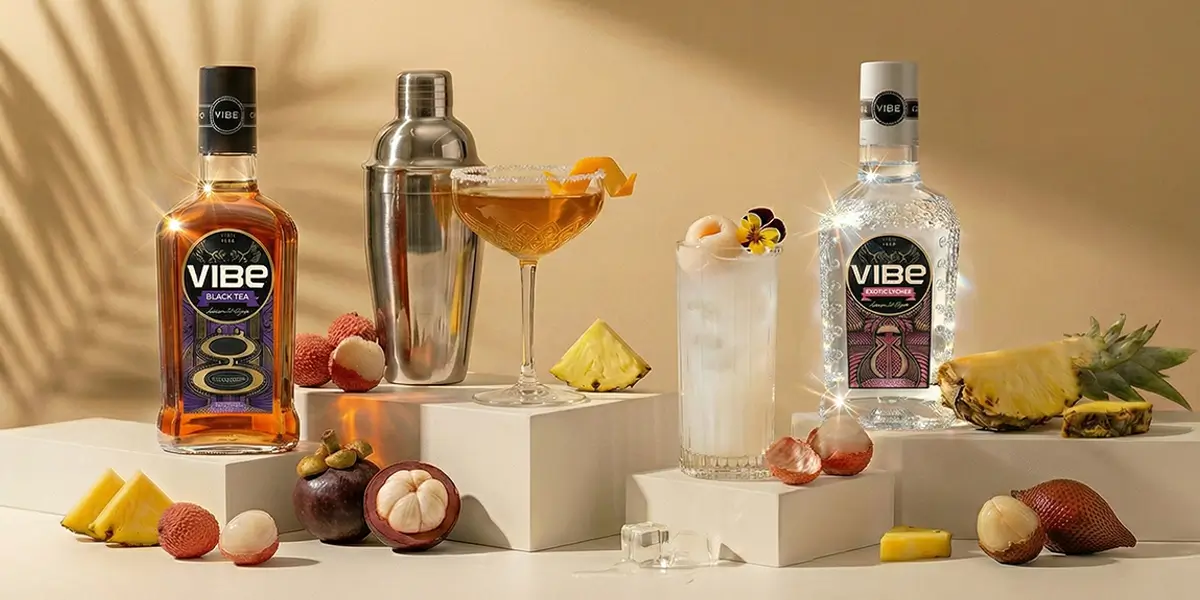
One tangible proof of this evolution of local pride is Vibe Liqueur & Spirits, an Indonesian local alcohol producer that has won various kinds of international awards. Carrying the spirit of innovation, Vibe Liqueur & Spirits offers an elegant drinking experience with various flavor variants and varying levels of alcohol content. Its flavor flexibility and international-standard quality make the collection from Vibe very perfect to be created into various cocktail recipes accompanying your celebration moments with a touch of worldwide local flavors.
Visit the Wekendvibe website and community to get exclusive information regarding the best venue recommendations, DIY cocktail recipe guides, as well as various other unique information surrounding entertainment culture and lifestyle. Celebrate the wealth of Indonesian local tradition and innovation with the right choice!
FAQ (Frequently Asked Questions)
1. What is Tuak Karo?
Tuak Karo is a traditional alcoholic drink consumed by the community in Tanah Karo, North Sumatra. This drink is made from the natural fermentation of sugar palm nira with the addition of specific tree bark such as raru.
2. What are the basic ingredients of Tuak Karo?
The main basic ingredient is fresh nira water that drips from the manggar of the sugar palm tree (Arenga pinnata), which is then fermented.
3. What is the difference between nira and tuak?
Nira is the pure tapped water freshly taken from the tree; it tastes sweet and contains no alcohol. Tuak is nira that has undergone a fermentation process so it contains alcohol, has a slightly sour or bitter taste, and has a yeasty aroma.
4. Is tuak a Batak traditional drink that must be present at every event?
Although tuak is often referred to as a Batak traditional drink and is very closely attached to Toba Batak social life, its presence is not always “mandatory” in every traditional ceremony of all Batak ethnic groups. In the Karo community, tuak functions more socially in everyday life rather than as an absolute requirement for sacred traditional rituals.
5. Where can one get to know tuak culture in North Sumatra?
Tourists can encounter this tradition in the rural areas of North Sumatra, such as the Berastagi area, Kabanjahe, or the North Tapanuli region and around Lake Toba, where residents often gather in traditional stalls in the afternoon.
6. What should tourists pay attention to when learning about the tuak drinking tradition?
Tourists are advised to always respect local ethics, ask permission before documenting residents’ activities, obey the legal age limit for drinking alcohol (21+), know their body’s tolerance, and are strictly forbidden from driving after drinking.