 Log in
 Register


The world of spirits can often seem intimidating, and at the very top of that pyramid stands a beverage with undeniable charisma: whisky. Golden in color, housed in elegant bottles, and frequently associated with iconic figures in pop culture, whisky makes many people curious and eager to learn more about it.
However, there is one major secret in the world of this beverage: you do not have to be an expert or a sommelier to enjoy whisky. Anyone can appreciate it. Understanding whisky is a journey of flavor. This article will serve as a compass to guide that journey, comprehensively covering everything from basic definitions and history to the best ways to sip your first glass without feeling overwhelmed.
What Is Whisky?
Simply put, whisky is a distilled alcoholic beverage made from a fermented grain mash, which is then aged in wooden casks (typically oak). Three primary elements, grains, yeast, and water combine with time and wood to create an incredibly broad spectrum of flavors.
Whisky vs. Whiskey: What Is the Difference?
The question often arises as to why there are two different spellings. The answer lies purely in geography:
- Whisky (without an ‘e’): Used by countries such as Scotland, Japan, Canada, and most other global producers.
- Whiskey (with an ‘e’): Used by Ireland and the United States.
As a simple analogy to remember this rule: Countries with the letter ‘E’ in their English names (Ireland, United States) generally use the spelling “Whiskey”.
How Is Whisky Made?
The whisky-making process is a blend of chemistry and the art of patience. Here is a simple flowchart of its production:
[Grains] ➔ Malting ➔ Mashing ➔ Fermentation ➔ Distillation ➔ Aging/Maturation ➔ Bottling
- Malting: Grains (usually barley) are soaked in water until they germinate. This process breaks down starches into fermentable sugars. Germination is stopped by drying the grains in giant ovens or kilns (sometimes using peat smoke).
- Mashing: The dried grains are ground into a coarse flour (grist) and mixed with hot water. The resulting sweet liquid is called wort.
- Fermentation: Yeast is added to the wort. The yeast consumes the sugars and converts them into alcohol. The result of this process is a beer-like liquid with a low alcohol content (around 8-10% ABV), known as wash.
- Distillation: The wash is heated in a still (either a pot still or a column still). Because alcohol evaporates at a lower temperature than water, the alcohol vapor rises, is collected, and is cooled back into a liquid. This liquid now has a high alcohol content, is clear in color, and is called new make spirit.
- Aging (Maturation): This clear liquid is transferred into oak barrels. Over the years, the wood imparts color, aroma, and approximately 60-80% of the whisky’s total flavor profile.
- Bottling: Once deemed mature, the whisky is often blended for flavor consistency, diluted with water to reach standard alcohol levels (usually 40-46% ABV), and then bottled.
Basic Ingredients of Whisky
Every ingredient makes a vital contribution to the final product:
- Barley: Provides cereal, nutty, and toasted bread characteristics. This is the primary ingredient for Scotch single malt.
- Corn: Produces a sweet, smooth flavor with hints of vanilla and caramel. It is the main ingredient for Bourbon.
- Rye: Delivers spicy, black pepper, and sharp fruity notes.
- Wheat: Yields a very smooth texture and a sweetness reminiscent of honey and whole wheat bread.
- Water: Since water makes up a large portion of whisky, the mineral quality of the natural water source heavily determines the purity of the flavor.
- Yeast: In addition to creating alcohol, specific yeast strains produce ester compounds that provide fruity aromas such as apple, pear, or banana.
Essential Types of Whisky
Knowing the types of whisky is key for beginners seeking to discover their flavor preferences.
- Scotch Whisky: Originates from Scotland and must be aged for a minimum of three years in oak casks. Scotch is renowned for its complex, sophisticated flavors and occasionally a smoky aroma. Scotland features distinct whisky-producing regions, such as Speyside (sweet and fruity) and Islay (heavily peated/smoky).
- Irish Whiskey: Made in Ireland. It generally undergoes a triple distillation process, making it incredibly smooth, light, and easy to drink. It rarely uses peat smoke (unpeated).
- Bourbon: A signature American whiskey that must be made from at least 51% corn and aged in new, charred oak barrels. Its flavor profile is bold, sweet, and packed with notes of vanilla, caramel, and cinnamon.
- Rye Whiskey: Made from a minimum of 51% rye. It features a drier, spicier, and sharper flavor profile compared to bourbon. It is highly popular as a base for classic cocktails.
- Japanese Whisky: Inspired by Scotch production techniques, Japanese whisky is crafted with exceptional precision. Its flavor profile is highly elegant, balanced, floral, and smooth.
- World Whisky: This category encompasses whiskies produced outside the traditional countries mentioned above. Successful examples hail from Taiwan, India, and Australia, demonstrating that tropical climates can accelerate the maturation process and yield unique tropical flavors.
Comparison: Single Malt vs. Blended Whisky
Many assume single malt is always superior to blended whisky. Let’s clarify the technical differences using the following table:
| Characteristics | Single Malt Whisky | Blended Whisky |
| Definition | Made entirely at a single distillery. | A blend of several types of whiskies sourced from various distilleries. |
| Main Ingredient | 100% Malted Barley. | A blend of malted barley and other grains (such as corn or wheat). |
| Flavor Consistency | Reflects the specific uniqueness of its distillery (local character). | Designed by a Master Blender for a harmonious and balanced flavor consistency from year to year. |
| Price | Generally more expensive due to the specific, localized production process. | More affordable and highly accessible. |
| Examples | Glenfiddich, Macallan, Lagavulin. | Johnnie Walker, Chivas Regal, Ballantine’s. |
Understanding Age Statements
The number on a bottle (such as 10, 12, or 18 Years Old) indicates the minimum amount of time the whisky spent aging in a wooden cask. The golden rule: the stated age reflects the youngest liquid in the bottle. Therefore, a bottle labeled as 12 Years Old might contain a blend of 15- or 20-year-old whiskies, but not a single drop can be younger than 12 years.
- NAS (No Age Statement): Whisky that does not display an age statement on its label. The producer focuses on achieving a specific flavor profile without being restricted by an age requirement.
- The Age Myth: It is important to remember that age is not the sole indicator of quality. A 25-year-old whisky from Scotland could be comparable in depth to a 5-year-old whisky from a warm climate like Taiwan or India, as heat accelerates the interaction between the liquid and the wood.
Why Do Whiskies Vary in Color?
When freshly distilled, whisky is as clear as water. Pale yellow, golden, and dark mahogany hues come entirely (or predominantly) from the aging process inside wooden casks.
- Cask Types: Ex-bourbon casks impart a lighter golden color and vanilla notes. Ex-Sherry casks (from Spain) provide a dark copper-red color and dried fruit flavors.
- Cask Finishing: A modern trend where whisky is transferred to another type of cask (e.g., ex-Rum or Port wine casks) for the final few months before bottling, adding extra layers of flavor and color.
How to Enjoy Whisky
There are no strict rules dictating how you must enjoy whisky, but there are certain methods to optimize the tasting experience:
- Neat: Poured and consumed at room temperature without any additions. This is the best way to experience the original character crafted by the Master Blender.
- With a Drop of Water: Adding 2-3 drops of room-temperature water. Scientifically, water breaks the liquid’s surface tension, releasing aroma compounds that were previously trapped. This is highly recommended for high-proof whiskies.
- On the Rocks: Adding ice cubes (preferably a large, spherical ice cube so it melts more slowly). The cooling effect reduces the alcohol’s burning sensation, though it can sometimes mask the whisky’s more subtle aromas.
- Highball: A refreshing mixture of whisky, soda water, and plenty of ice. Highly popular in Japan, it is an excellent pairing for food.
- Cocktails: Using whisky as the foundation for classic mixed drinks, such as the Old Fashioned, Manhattan, or Whiskey Sour.
Tips for Choosing Your First Bottle of Whisky
Starting your exploration does not need to be overwhelming. Consider these general guidelines (without focusing on specific brands):
- Look for Approachability: Start with an Irish Whiskey or Blended Scotch, which are known for being light, sweet, and easy to drink.
- Try Sweet Profiles: Bourbon is perfect for beginners who enjoy familiar flavors like caramel, vanilla, and cinnamon.
- Avoid Heavily Peated Whiskies Initially: Smoky/peated whiskies have intensely strong flavor profiles reminiscent of a campfire or medicinal iodine. It takes time to calibrate your palate to appreciate them.
- Check the Alcohol Content: Opt for standard ABV ranges (40-43%). Avoid purchasing a Cask Strength whisky as your first bottle, as the high alcohol content can easily overwhelm a beginner’s palate.
Exploring Whisky Culture Across Various Countries
People in different parts of the world have unique traditions for enjoying this spirit:
- Scotland: Enjoyed casually in local pubs with friends, often drunk neat or with a drop of water to ward off the cold weather.
- Japan: The traditions of Mizuwari (mixed with cold water) and the Highball (mixed with soda) are deeply ingrained and are frequently served alongside Izakaya food.
- America: A central component of bar culture, deeply intertwined with American history, and stylishly crafted into iconic classic cocktails.
- Ireland: Famous for the relaxed atmosphere of Irish pubs (craic). It is often enjoyed neat, paired with a stout beer, and serves as the primary ingredient in authentic Irish Coffee.
Summary: Characteristics of Whisky Types
For easy reference, the following table summarizes the primary profiles of various whisky types:
| Type | Country of Origin | Main Grain | Dominant Flavor Character |
| Scotch (Speyside) | Scotland | Malted Barley | Apple, honey, floral, soft spices. |
| Scotch (Islay) | Scotland | Malted Barley (Peated) | Thick smoke, sea/salt, medicinal (iodine). |
| Irish Whiskey | Ireland | Barley & Malted Barley | Very smooth, light, fresh fruit, cereal. |
| Bourbon | United States | Corn (Min. 51%) | Sweet, thick vanilla, caramel, toasted oak. |
| Rye Whiskey | United States | Rye (Min. 51%) | Spicy, black pepper, cinnamon, drier finish. |
| Japanese Whisky | Japan | Malted Barley | Elegant, balanced, highly precise, floral. |
Begin Your Flavor Journey in the World of Spirits
Understanding whisky is the first step toward a profound appreciation of one of the world’s most complex and historic beverages. From a production process that demands patience to the diverse array of styles spread across different countries, every bottle tells the story of its origin. Ultimately, enjoying spirits is not about adhering to rigid rules, but rather embarking on an endless exploration to find the flavor profile that best suits your personal taste.
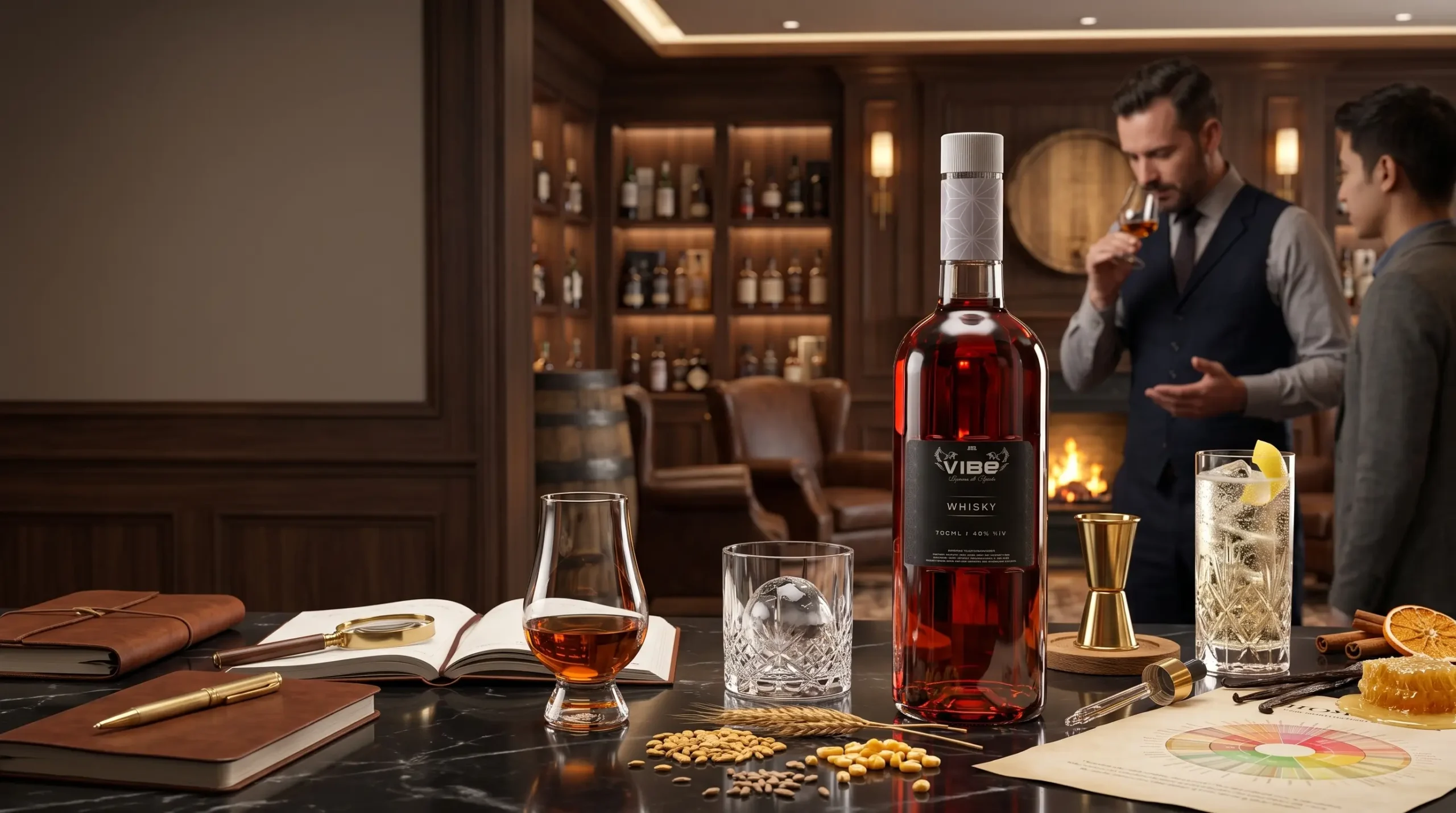
In the journey to explore the world of alcoholic beverages, it becomes clear that premium quality does not exclusively hail from Europe or the Americas. As a proud representative of the local industry, Vibe Liqueur & Spirits offers an authentic line of Indonesian alcohol that has successfully proven its quality by winning various prestigious international awards. Interestingly, Vibe not only excels with a highly comprehensive collection of flavor variants and diverse alcohol contents, but it also specifically offers local whisky variants whose quality is truly noteworthy. This entire product line is a perfectly versatile choice whether enjoyed straight or mixed into creative cocktail recipes.
To continue discovering inspiration regarding lifestyle and responsible drinking culture, visit Wekendvibe! Find the latest updates on the best venue recommendations for a night out, exclusive cocktail recipe guides, and various other unique insights into the world of food, beverages, and spirits. Let’s raise a glass, explore new flavors, and enjoy every moment responsibly.