 Log in
 Register


Behind the fertile expanse of the Nusantara archipelago lies a wealth of botanicals and agricultural wisdom that has evolved over hundreds of years. From the sap of sugar palm trees in the mountains of Minahasa, fermented glutinous rice in the lands of Java, to lontar palm sap along the coasts of Bali and Flores, Indonesia possesses a remarkably rich tradition of fermented and distilled beverages.
For several decades, the narrative surrounding alcoholic beverages in the country was often confined to a narrow dichotomy: traditional beverages tied to customary rituals versus high-value imported products. However, entering 2026, this landscape has transformed significantly.
Indonesia is now witnessing a new chapter: the intersection of ancient agricultural traditions, mastery of modern distillation science, the rise of craft spirits, and the emergence of local brands competing with confidence on the international stage. This article serves as a comprehensive guide exploring the full spectrum of Indonesian local alcohol—from its cultural roots and technical processes to its geographical mapping and modern evolution.
Re-evaluating the Spectrum of Indonesian Local Alcohol
When hearing the term “local alcohol,” the public often thinks solely of traditional fermented drinks. In terms of the modern beverage industry and terminology, this category features a far more structured classification. Calling all alcoholic beverages made in Indonesia “traditional drinks” is a misclassification. Four primary categories shape this ecosystem:
- Traditional Fermented Beverages: Produced by converting natural sugars from raw ingredients (such as palm sap, rice, or fruit) into alcohol using yeast without distillation. The alcohol content generally ranges between 2% and 15% ABV (Alcohol by Volume). Examples: Tuak, liquid Brem.
- Traditional Distilled Beverages: Fermented liquids that are heated and vaporized using simple stills or pipes to extract a higher ethanol concentration (generally 20%–45% ABV). Examples: Cap Tikus, traditional Balinese Arak, Sopi, Moke.
- Modern Craft Spirits: High-proof spirits produced by licensed manufacturers using standardized distillation equipment (pot stills or column stills), adhering to strict quality control, complying with industrial hygiene regulations, and presenting contemporary flavor profiles.
- Local Liqueurs & Flavored Spirits: Modern spirit products blended with sugar, fruits, botanicals, or local extracts designed specifically for the mixology and cocktail bar industry.
From Fermentation to Distillation: The Science Behind Local Alcohol Production
Understanding alcoholic beverages requires an understanding of the fundamental scientific processes that transform raw ingredients into liquids with distinct character.
The Wonder of Nusantara’s Natural Fermentation
Fermentation is one of the oldest biological processes in human culinary history. Yeast microorganisms (generally Saccharomyces cerevisiae strains or traditional starter cultures such as laru and ragi tape) consume simple sugars (sucrose, glucose, fructose) found in local plants. One glucose molecule is converted by yeast into two ethanol molecules and carbon dioxide gas, accompanied by the release of thermal energy.
In Indonesia, raw materials rich in carbohydrates and sugars are abundant:
- Palm Saps: Sugar palm sap (Arenga pinnata), coconut palm sap (Cocos nucifera), and palmyra/lontar palm sap (Borassus flabellifer). This sweet, fresh liquid can ferment spontaneously within hours due to the presence of wild yeasts in the tropical air.
- Rice and Glutinous Rice: Require a saccharification process (breaking down complex starches into simple sugars via molds) before yeast can convert them into alcohol, as seen in the production of brem and ciu fermentation made from fermented cassava (tape singkong).
The Art of Distillation: Refining Character and Concentration
Natural fermentation has a biological limit: yeast cells die once the alcohol concentration reaches approximately 14%–16% ABV. To achieve higher alcohol concentrations and sharper flavor profiles, producers implement distillation.
The principle of distillation relies on differences in boiling points:
- Ethanol (Pure Alcohol): Boils at approximately 78.37°C.
- Water: Boils at 100°C.
When fermented liquid is heated between these two temperature ranges, ethanol vaporizes first, travels through a condenser pipe, and condenses back into a clear liquid with a high alcohol concentration.
In traditional methods, distillation frequently utilizes clay pots or bamboo pipes. In contrast, modern distillation facilities use stainless steel and copper stills that allow for the precise separation of heads (undesirable early compounds), hearts (high-purity ethanol), and tails (heavier end compounds).
Map of Traditional Indonesian Alcohol: A Cultural Journey from West to East
Traditional fermented and distilled beverages are inseparable from the social fabric of indigenous communities across the Nusantara archipelago.
Sumatra & Java: The Heritage of Tuak, Brem, and Ciu
- Tuak (North Sumatra & Surrounding Areas): In the Batak lands, tuak is tapped from sugar palm trees (bagot) or coconut trees. Tuak is not merely a casual drink at a lapo, but an essential component in customary gatherings (martumpol, wedding ceremonies, and harvest festivals), symbolizing warmth and hospitality toward guests. Tuak has a fresh sweet-sour flavor profile with a low alcohol concentration (around 3%–6% ABV).
- Liquid Brem (East Java & Bali): Produced from the fermentation of pressed white or black glutinous rice, cooked and fermented with starter yeast over several days. Brem features a dominant sweet flavor, a thick texture, and a distinctive yeasty aroma.
- Ciu (Central Java): Two well-known production centers are Ciu Bekonang (Sukoharjo), which uses sugarcane molasses—a legacy of the colonial sugar mill era—and Ciu Banyumas, which is based on fermented cassava (tape singkong). Ciu represents the agrarian community’s adaptation in converting agricultural yields into a clear distilled spirit ranging from 20% to 40% ABV.
Bali: Exploration of Balinese Arak and Policy Transformation
Balinese Arak plays a crucial role in Balinese Hindu cosmology. Beyond keeping farmers warm in the highlands, arak serves as an offering in rituals (tabuhan or tetabuhan) to maintain balance among humans, nature, and the spiritual underworld (Bhuta Kala).
Mainly produced in Karangasem from lontar sap and in Buleleng from coconut sap, Balinese Arak gained formal recognition when the Bali Provincial Government issued Bali Governor Regulation Number 1 of 2020 on the Governance of Balinese Fermented and/or Distilled Beverages. This regulation provides a legal framework for hygiene standardization, protection of local artisans, legal labeling, and the integration of arak into the tourism and high-end hospitality sectors.
Sulawesi: The Boldness of Cap Tikus from the Minahasa Highlands
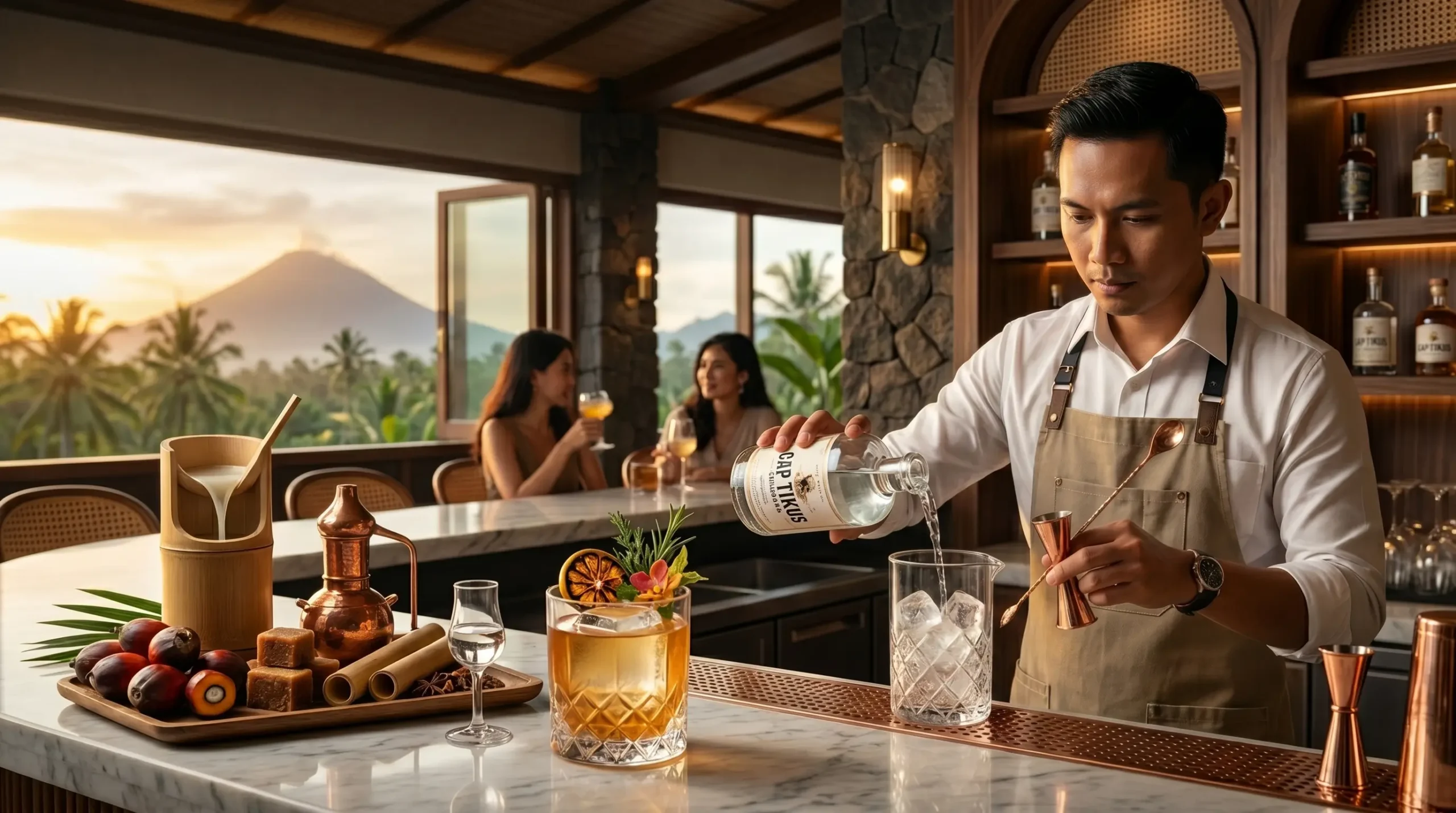
Originating from Minahasa, North Sulawesi, Cap Tikus is distilled from fermented sugar palm sap known locally as se’guer. The name “Cap Tikus” historically dates back to the pre-independence era when the product was packaged in containers bearing an image of a rat by certain merchant groups.
In Minahasa customs, Cap Tikus is consumed during Mapalus traditions (communal mutual-aid agricultural work) to restore stamina and combat mountain cold. Through careful pot-still distillation, Cap Tikus yields a clear spirit ranging from 30% to 45% ABV with a pronounced sugar palm sap aroma.
Nusa Tenggara & Maluku: Communal Spirit in Sopi and Moke
- Sopi (East Nusa Tenggara & Maluku): Derived from the Dutch loanword zoopje (meaning a small sip), sopi is distilled from lontar or sugar palm sap. Sopi is a central pillar in peace treaties between tribes, marriage proposals, and funeral rites across islands such as Flores, Timor, Ambon, and Seram.
- Moke (Central & East Flores): Distilled using earthenware pots and long bamboo conduits, Moke represents a symbol of brotherhood. It is broadly classified into two types: Moke Putih (the naturally sweet fermented liquid prior to distillation) and Moke Hitam/Bakar (the pure, high-proof spirit from the first distillation run, which can ignite when exposed to a flame).
Comparative Table: Varieties of Nusantara Traditional Alcohol
| Beverage Name | Dominant Region of Origin | Primary Raw Material | Processing Method | Estimated ABV | Status & Socio-Commercial Context |
| Tuak | North Sumatra, Tana Toraja, Tuban | Sugar Palm Sap / Coconut Sap / Rice | Natural Fermentation | 3% – 8% | Customary beverage, daily communal tradition |
| Liquid Brem | Bali, Madiun | White/Black Glutinous Rice | Solid Yeast Fermentation | 8% – 14% | Balinese ceremonial beverage, cultural souvenir |
| Balinese Arak | Karangasem, Buleleng (Bali) | Coconut Sap, Lontar Sap, Rice | Fermentation & Distillation | 20% – 45% | Religious rituals, legalized commercial under Governor Reg. |
| Cap Tikus | Minahasa (North Sulawesi) | Sugar Palm Sap (Se’guer) | Fermentation & Distillation | 30% – 45% | Mapalus culture, registered commercial product |
| Sopi | Flores (NTT), Ambon (Maluku) | Lontar / Sugar Palm Sap | Fermentation & Distillation | 25% – 45% | Sanction binder & customary law rituals |
| Moke | Flores (NTT) | Lontar / Sugar Palm Sap | Traditional Pot Distillation | 20% – 45% | Fraternity feasts, family rituals |
| Ciu | Sukoharjo, Banyumas (Central Java) | Molasses / Fermented Cassava | Fermentation & Distillation | 20% – 40% | Rural agricultural tradition |
| Ballo | South Sulawesi (Toraja/Bugis) | Nipa / Sugar Palm Sap | Spontaneous Fermentation | 4% – 10% | Toraja customary guest hospitality (Rambu Solo’) |
The Rise of Modern Indonesian Craft Spirits: Transcending Tradition
The evolution of the local beverage industry over the past decade no longer relies exclusively on traditional methods. The era of Indonesian craft spirits is defined by a paradigm shift: blending local tropical botanicals with modern manufacturing standards.
Evolution of Production Standards and Quality Control
The key distinction between cottage-level home distillation and licensed industrial facilities lies in consistency and hygiene. Modern facilities utilize:
- Multi-Stage Filtration Systems: Eliminating impurities and minimizing unwanted methanol levels through precise temperature control.
- Computerized Column Stills: Maintaining stable alcohol fractioning across every production batch.
- Food Safety Standards: Securing BPOM distribution permits and undergoing regular audits by quality regulatory agencies.
The Role of Cocktail Culture and the Hospitality Industry
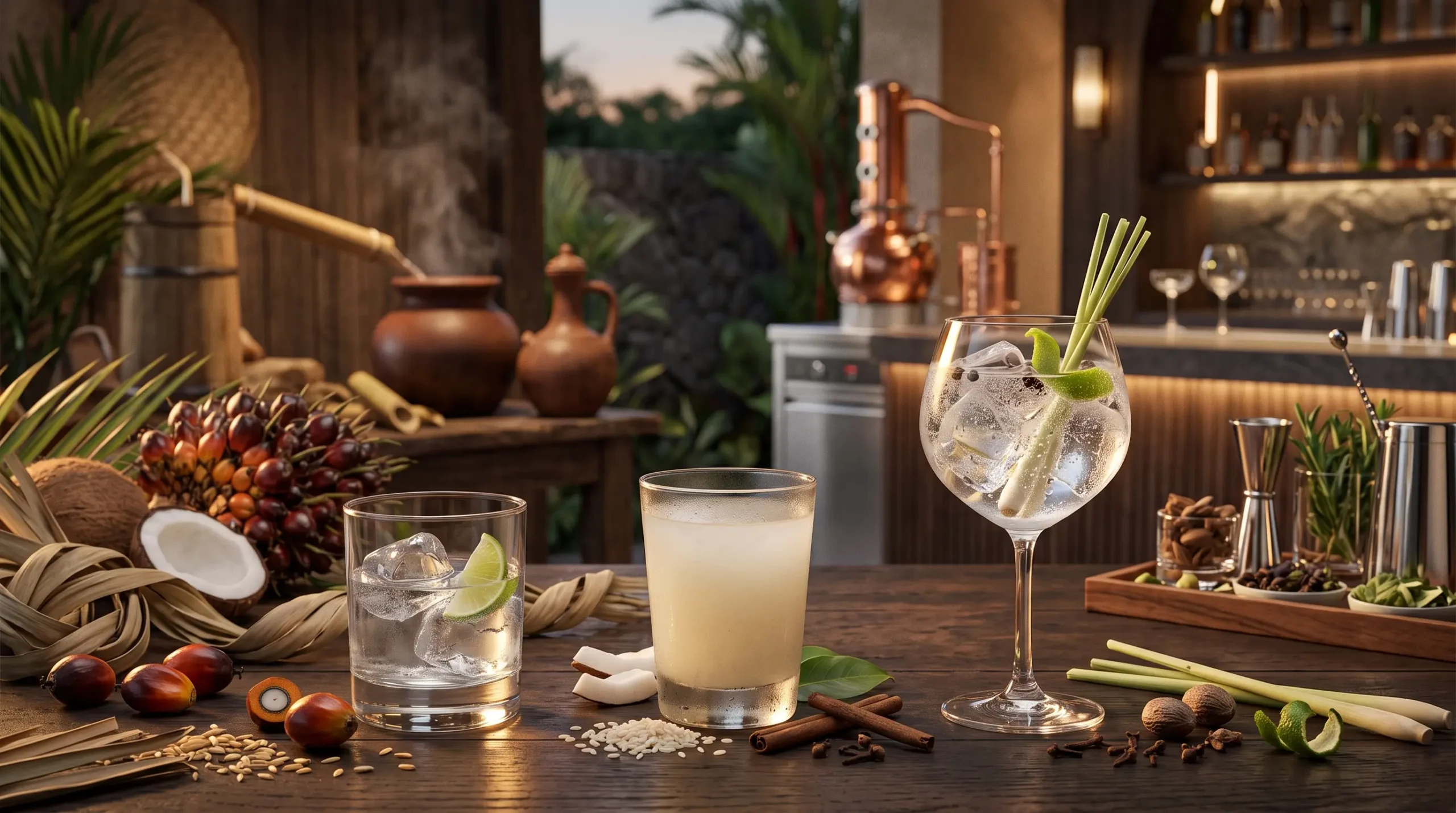
This transformation is driven by the expansion of the cocktail bar industry across Indonesia’s major metropolitan centers. Professional mixologists actively explore local ingredients to build signature drink menus. Local spirits are no longer served strictly straight; they serve as a base for high-end cocktail creations alongside aromatic regional ingredients like kaffir lime, lemongrass, pandan leaves, and torch ginger flower (kecombrang).
Indonesian Local Spirit Brands on the Global Stage
When a local alcoholic product enters international markets or earns accolades in global competitions, it reflects objective recognition of formulation quality and compliance with world-class production standards.
Defining “Going International”
It is essential to distinguish international milestones using objective criteria:
- Participation & Global Competition Awards: Evaluated through blind tastings by independent judging panels at renowned competitions like the Asia World Spirits Competition (Singapore), Ultimate Spirits Challenge (New York), or San Francisco World Spirits Competition.
- Export Distribution Channels: Formal availability of products in overseas retail outlets or bars, meeting local customs standards.
- Global Bar Collaborations: The use of local spirits on cocktail menus in world-class international establishments.
Case Study: VIBE Liqueurs & Spirits and Global Competition Track Record
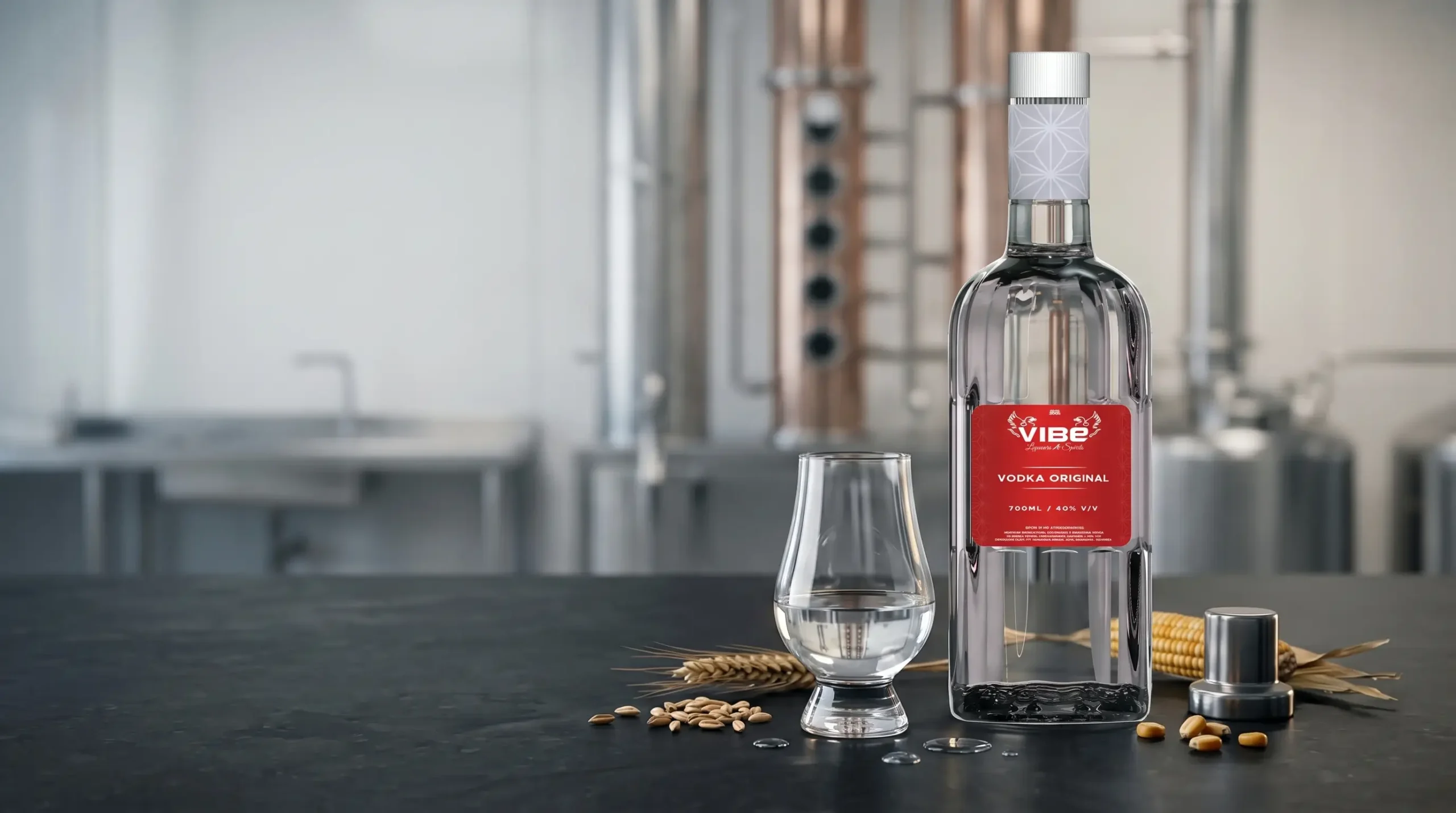
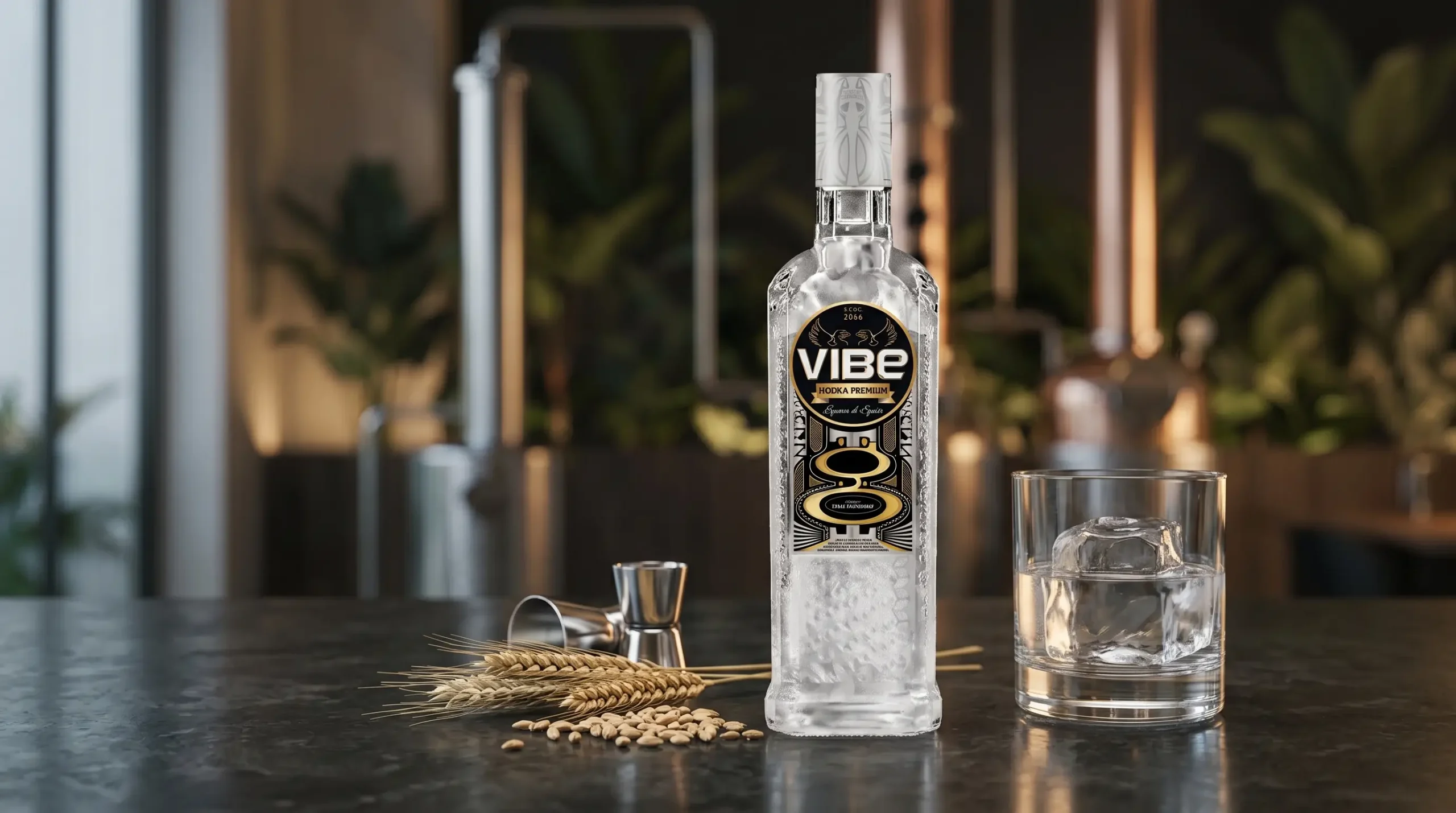
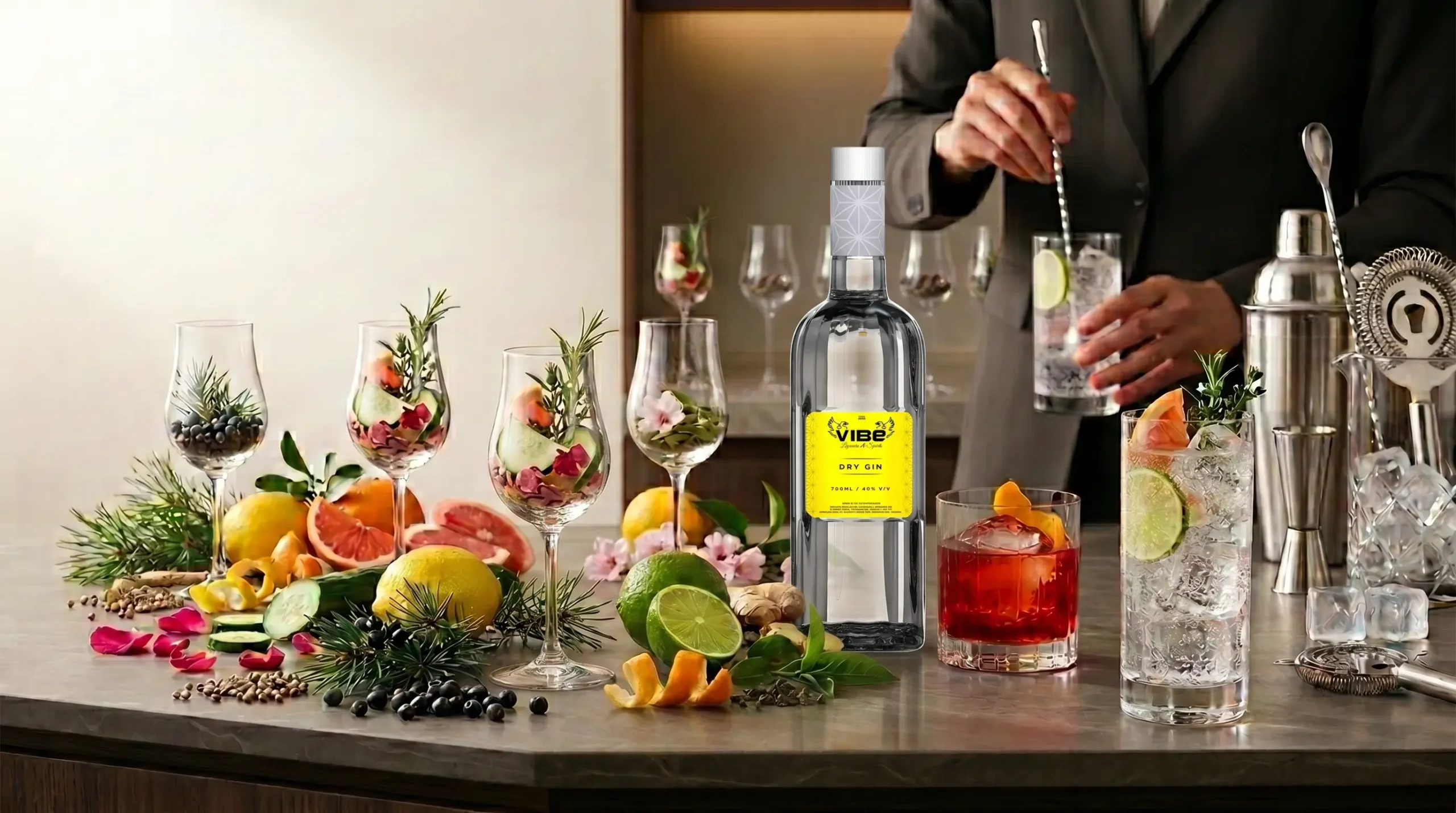
One notable representative of standardized modern spirits from Indonesia is VIBE Liqueurs & Spirits, produced by PT Kharisma Serasi Jaya based in Semarang, Central Java. VIBE takes an industrial-scale manufacturing approach with an extensive portfolio spanning basic spirits (such as Vodka, Gin, Rum, and Blue Agave) to varied liqueur expressions (including Black Tea, Peach, Exotic Lychee, and Triple Sec).
In international competition records, VIBE has consistently benchmarked its product formulations against global standards:
- Ultimate Spirits Challenge (USC) 2020 (New York): Vibe Rum and Vibe Gin achieved an exceptional score of 92. Other variants also scored high: Vibe Black Tea (89), Vibe Exotic Lychee (86), Vibe Vodka (86), and Vibe Triple Sec (85).
- Asia International Spirits Competition 2019: Claimed 6 awards and was named Brand of The Year 2019.
- The Liqueur Masters Asia 2019: Vibe Exotic Lychee and Vibe Peach were awarded Silver Awards for their balanced, exotic sweetness.
- The World Gin Masters Asia 2019: Accorded recognition specifically for the profile and distillation of Vibe Gin.
- Asia World Spirits Competition 2026 (Singapore): VIBE secured an array of medals:
- 🥈 Silver Medals: Awarded to Vibe Gin, Rum, Black Tea, and Blue Agave.
- 🥉 Bronze Medals: Awarded to Vibe Peach, Vodka Original, and Exotic Lychee.
These results demonstrate that Indonesian-formulated spirits and liqueurs consistently compete in blind organoleptic assessments by independent international panels.
Other Indonesian Local Brands Gaining Global Recognition
Alongside VIBE, several modern domestic producers have achieved notable milestones:
| Brand Name | Region of Origin | Product Category | Flagship Products | Track Record / International Recognition |
| VIBE | Semarang, Central Java | Spirits & Liqueurs | VIBE Dry Gin, Black Tea, Blue Agave, Rum, Liqueurs | Won Silver Medals (Dry Gin, Rum, Black Tea, Blue Agave) & Bronze Medals (Peach, Vodka Original, Exotic Lychee) at the Asia World Spirits Competition 2026 (Singapore); along with recognition at the Ultimate Spirits Challenge (New York). |
| East Indies Gin | Bali | Craft Gin | East Indies Archipelago Dry Gin | Utilizes Nusantara botanicals (kecombrang), exported internationally, and earned medals in international spirit competitions. |
| Kura Kura Beer | Badung, Bali | Craft Beer | Island Ale, Lager | Gained recognition across the Asia-Pacific craft brewing scene with regional market distribution. |
| Iwak Arumery | Central Java / Bali | Infused Arak | Aged Infused Arak | Developed modern arak based on a local spice repository for international cocktail bars. |
| Sababay Spirits | Gianyar, Bali | Wine, Grappa, Vodka | Saba Grappa, Saba Vodka Infusion | Earned multiple accolades at AWC Vienna and other global beverage industry competitions. |
Consumer Guide: Reading ABV Labels and Excise Regulations
Responsible and safe consumption begins with a consumer’s ability to identify the legality and technical details printed on product packaging.
Anatomy of a Legal Alcoholic Beverage Label
Every bottle of alcoholic beverage legally distributed in Indonesia must state the following details on its packaging:
- ABV (Alcohol by Volume): The percentage volume of pure ethanol in 100 milliliters of solution at 20°C. A label of 40% ABV means there is 40 ml of pure ethanol in every 100 ml of liquid.
- Net Volume: Expressed in milliliters (ml) or liters (L).
- Distribution Permit Number (BPOM RI MD/ML): Indicates that the product has passed food safety laboratory tests and chemical contamination thresholds.
- Authentic Excise Stamp (Pita Cukai): A specialized adhesive hologram seal from the Directorate General of Customs and Excise placed over the bottle cap as proof of paid state excise duties.
Regulatory Framework for Ethyl Alcohol-Containing Beverages (MMEA)
Under Indonesian customs and excise laws, ethyl alcohol is an exciseable good subject to controlled distribution. Ethyl Alcohol-Containing Beverages (Minuman Mengandung Etil Alkohol / MMEA) are categorized into three main tiers based on alcohol strength:
- Group A: MMEA with an ethanol content up to 5% (such as beer and light fermented drinks).
- Group B: MMEA with an ethanol content of more than 5% up to 20% (such as wine, medium-strength brem, and cider).
- Group C: MMEA with an ethanol content of more than 20% up to 55% (such as distilled spirits, whisky, gin, vodka, and high-proof legal arak).
Licensed commercial alcohol producers are required to hold an official operational permit known as NPPBKC (Nomor Pokok Pengusaha Barang Kena Cukai) and comply with zoning and distribution guidelines set by the Ministry of Trade and local regional governments.
Traditional Alcohol vs. Modern Craft Spirits
| Assessment Aspect | Traditional Alcohol | Modern Craft Spirits DOCX |
| Production Scale | Home micro-distilleries / artisans | Licensed industrial facilities |
| ABV Consistency | Fluctuates per batch | Precise & standardized |
| Processing Method | Wood-fired stills / simple drums | Column stills / Copper pot stills |
| Packaging & Branding | Simple, functional containers | Custom, aesthetic glass bottles |
| Permits & Excise | Governed by local bylaws / non-excise | BPOM registered & official excise stamps |
| Target Market | Customary rituals & local community | Commercial retail, bars & exports |
This comparison highlights that both categories complement each other: traditional drinks preserve cultural heritage and community agricultural wisdom, while modern craft spirits elevate local botanicals into contemporary standardized industries.
The Future of the Local Beverage Industry: Opportunities and Challenges
The domestic alcoholic beverage landscape faces several notable dynamics:
Strategic Opportunities
- Allure of Nusantara Botanicals: Indonesia’s biodiversity (Banda nutmeg, Maluku cloves, Sumatra cinnamon, torch ginger flower) offers distinct flavor differentiation not found among western producers.
- Gastro-Tourism & Mixology: Integration into premium tourism destinations and luxury resorts solidifies Indonesian culinary identity for international travelers.
- Appreciation from Newer Generations: Growing domestic consumer pride in high-quality, locally curated products (local pride) crafted through hygienic and responsible methods.
Challenges to Address
- Regulatory Hurdles: Multi-tiered distribution policies demand rigorous compliance and administrative adherence from industry stakeholders.
- Social Stigmatization: Uneven public awareness sometimes results in legal, certified products being incorrectly conflated with dangerous bootleg concoctions (oplosan).
- Raw Material Supply Chain Consistency: Weather-dependent harvest fluctuations impact the steady supply of high-grade sugar palm sap, lontar sap, and spices.
Weaving the Flavors of Nusantara in Every Sip: Time to Explore Further
The evolution of Indonesian local alcohol reflects a broader story: it is not merely a commodity, but an interplay between agricultural heritage, cultural roots, and modern distillation science. From tuak served in village halls to craft spirits poured in cocktail bars globally, Indonesian production continues to develop its place in the market.
For enthusiasts interested in experiencing modern Indonesian spirit production, Vibe Liqueur & Spirits presents an established example. Recognized across various international competitions, VIBE provides a broad range from core spirits to diverse liqueurs with various ABV profiles. Its flavor profiles are versatile for cocktail mixing, serving both home bartending and professional mixology.
Looking to explore more about the entertainment scene, top venue recommendations, and cocktail recipes? Visit wekendvibe to discover curated guides for your tasting journey.