 Log in
 Register


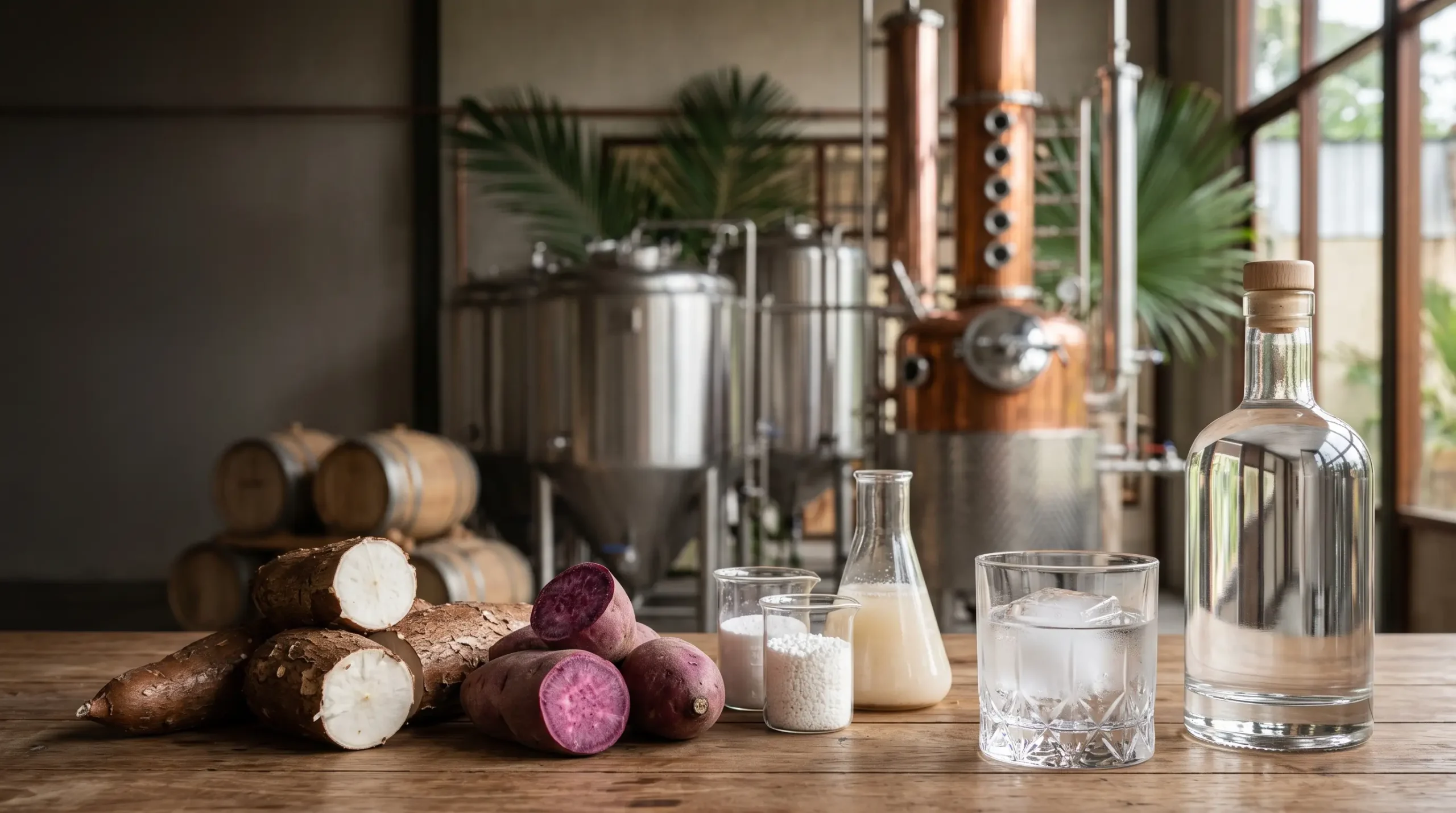
When talking about vodka, many people might immediately associate it with potatoes from Eastern Europe or wheat from Western countries. This perception is completely normal considering the long history of the beverage. However, along with the development of the food and beverage industry in the country, a new phenomenon has begun to emerge. Today, discussions about Indonesian local vodka made from cassava and sweet potatoes are increasingly heard among spirit enthusiasts.
Technically, the raw materials that can be used to produce neutral spirits are not limited to potatoes or cereals. Almost all agricultural commodities with a high sugar or starch content can be processed into alcohol. In Indonesia, cassava and sweet potatoes are very abundant and promising sources of starch.
This article will thoroughly explore why local spirit producers are starting to look at cassava and sweet potatoes, the scientific process behind their production, and whether these raw materials truly affect the final character of a beverage.
Can Vodka Be Made from Cassava and Sweet Potatoes?
The short answer is yes. To understand the reason, it is necessary to first know what is actually required to produce alcohol from agricultural raw materials.
The basic principle of alcohol production always relies on one main component: sugar. Sugar is the food source for microorganisms (yeast) that will later produce alcohol through the fermentation process. However, not all raw materials naturally taste sweet or contain simple sugars.
Raw materials like cassava and sweet potatoes fall into the category of starchy ingredients. Starch is essentially a complex carbohydrate chain composed of thousands of sugar molecules. To be fermented, these starchy ingredients must first go through a breakdown process until they become simple sugars.
Therefore, vodka does not have to be made from potatoes at all. The choice of raw materials varies greatly among producers, depending on logistical availability, the secret formula of each distillery, the technology used, and the applicable local regulations.
Why is Cassava Suitable as a Raw Material for Spirits?
There are several strong reasons why cassava as an alcohol raw material is a very rational choice for the Indonesian spirit industry.
First, cassava has a very high starch content. Cassava starch is proven to have a good yield rate when converted into fermentable sugars. In the global alcohol industry, cassava starch has even long been utilized as a raw material for industrial-grade ethanol production.
Second, the availability of the commodity plays a crucial role. Based on data from the Central Statistics Agency (BPS), Indonesia is one of the largest cassava-producing countries in the world. This high availability offers enormous potential for utilizing local raw materials for Indonesian local spirit producers.
Logistics and the supply chain in general are also important considerations. With the abundance of domestic raw materials, producers can reduce their dependence on imported ingredients. However, this does not necessarily conclude that cassava is definitively cheaper than other materials, considering that processing cassava starch into alcohol requires specific technology and investment.
What About Sweet Potatoes?
In everyday conversation, the term “ubi” (tuber) is often used generally, even though it refers to several different types of plants. It is very important to distinguish between cassava (ubi kayu) and sweet potatoes (ubi jalar).
Both are starchy materials, but they have slightly different profiles. Sweet potatoes generally have a slightly higher natural sugar content and a more distinct flavor character. These various starchy plants can in principle become sources of fermentation raw materials, as long as their starch is successfully processed into a sugar form that can be consumed by yeast.
Nevertheless, it cannot be generalized that all tubers have the same production characteristics. The water content, starch type, and conversion efficiency of each type of tuber will affect how producers design their production facilities. Furthermore, it is important to note that not all Indonesian local vodkas use these ingredients; many still use molasses or cereals imported from abroad.
From Starch to Alcohol — How is the Process?
How can a solid tuber turn into a clear alcoholic liquid? The process of making vodka from starchy materials involves highly precise biology and chemistry. Here is a simplified flow of these stages:
Stage 1 — Raw Material Preparation
The first step is to prepare the raw materials so that their starch components can be accessed. Cassava or sweet potatoes are cleaned, crushed, and heated or cooked with water to form a mash. This heating process aims to release the starch structure making it easier to process in the next stage.
Stage 2 — Starch Conversion
Because yeast cannot “eat” starch directly, the starch must be broken down into simple sugars. In modern industries, producers add specific enzymes (such as amylase) into the raw material mash. These enzymes are responsible for cutting the complex carbohydrate chains into fermentable sugars.
Stage 3 — Fermentation
Once the raw material mash becomes sweet (rich in sugar), the cassava fermentation process begins. Yeast is added into the tank. These microorganisms will consume the sugar and convert it into ethanol (alcohol) and carbon dioxide gas. The result of this stage is a low-alcohol liquid resembling rough beer or wine.
Stage 4 — Distillation
To become a spirit, the fermented liquid must be separated from water and other components to increase its alcohol content. The spirit distillation process utilizes the difference in boiling points between alcohol and water. Because alcohol boils at a lower temperature, the alcohol vapor will rise first in the still, and then be cooled back down into a concentrated liquid. For vodka, distillation is usually carried out multiple times using tall distillation columns to achieve maximum purity levels.
Stage 5 — Purification and Adjustment
The distilled vodka generally has a very high alcohol content and an extremely neutral character. This liquid will then go through further purification processes, for example, charcoal filtration, to remove unwanted flavor-carrying compounds. The final stage is cutting using demineralized water until it reaches the appropriate alcohol content for consumption.
Do Cassava and Sweet Potatoes Make Vodka Taste Different?
This question often sparks interesting debates. Based on its traditional definition, vodka is a neutral spirit that should not have a striking color, aroma, or taste.
However, raw materials remain one of the factors in the production process that can leave microscopic traces. Some spirit enthusiasts and sommeliers can sometimes perceive differences in mouthfeel or a slight aftertaste at the end of a sip.
Cassava and sweet potatoes have the potential to provide a texture that feels slightly thicker, rounder, or leaves a very subtle earthy sweetness, unlike wheat-based vodka which tends to taste crisper.
Even so, it is incorrect to conclude that cassava vodka definitely has a “cassava” taste. The final character of a beverage is heavily influenced by the number of distillation cycles, the strictness of the purification process, the filtration techniques, and the quality of the water added. Differences in product characteristics can only be validly proven through credible sensory testing.
Why Use Local Indonesian Raw Materials?
The trend of the Indonesian spirit industry beginning to explore Archipelago commodities is driven by several strategic factors, including:
1. Raw Material Availability
Indonesia has a very fertile tropical agricultural sector, producing various starchy commodities in massive quantities throughout the year. This availability ensures that distilleries will not run out of their main supplies.
2. Utilization of Local Commodities
Choosing raw materials from domestic farmers is part of the strategy to develop local supply chains. This step also contributes to creating a food and beverage industry ecosystem that is more independent and economically robust.
3. Cost and Logistics Characteristics
Purchasing domestic raw materials reduces reliance on foreign currency fluctuations and import logistics issues. Although equipment investment is high, short supply chains provide long-term production certainty.
4. Product Differentiation
Amidst global market competition, the narrative surrounding local Indonesian raw materials becomes a highly appealing product identity (storytelling). This differentiates local brands from international brands that already dominate the market.
5. Development of the Local Spirit Industry
Currently, local producers are increasingly bold in innovating and proving their quality. They objectively explore the potential of Archipelago commodities to create local spirits that possess unique and proud characters. This positive development is also proven by the presence of industry players like Vibe Liqueur & Spirits.
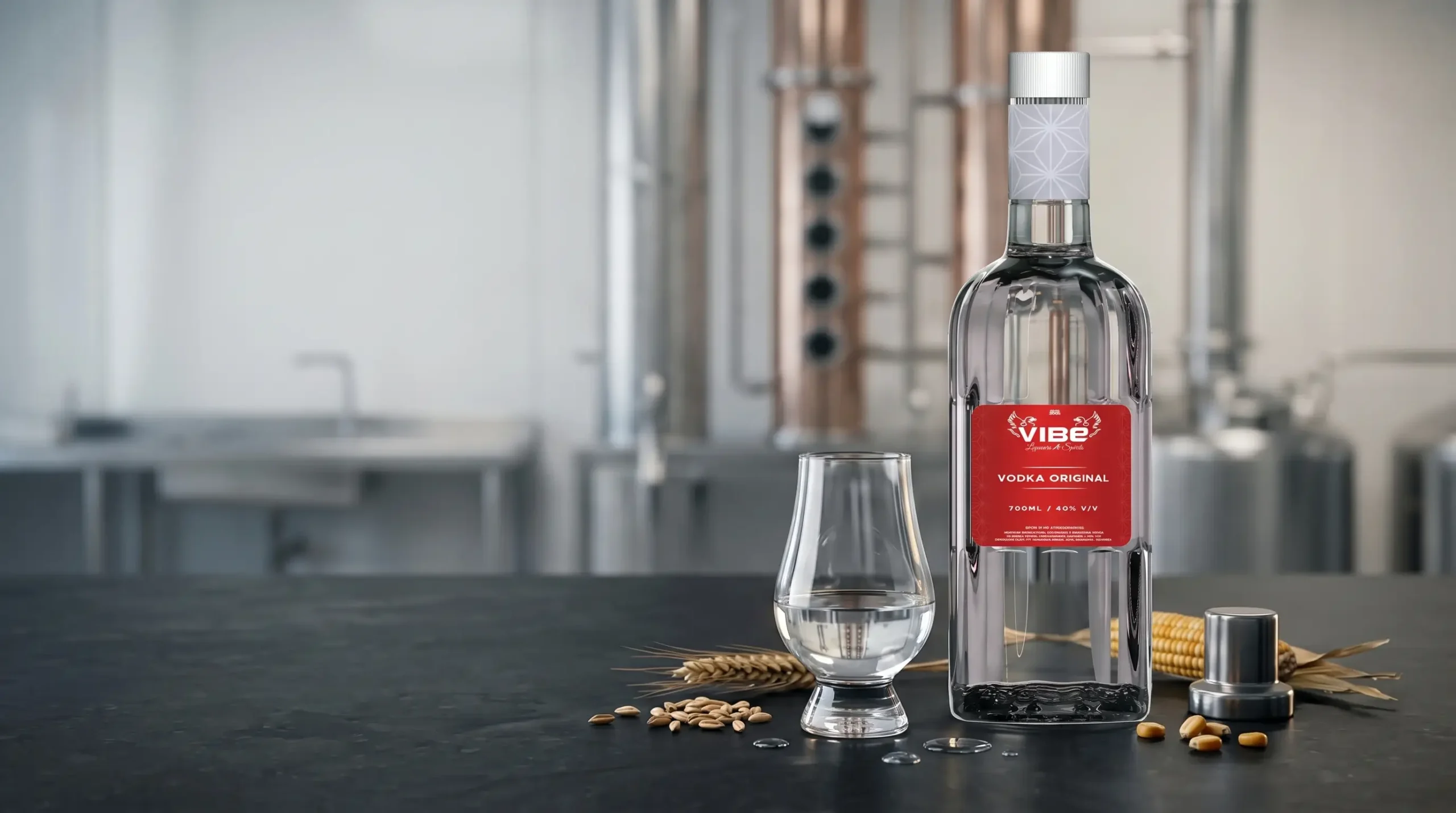
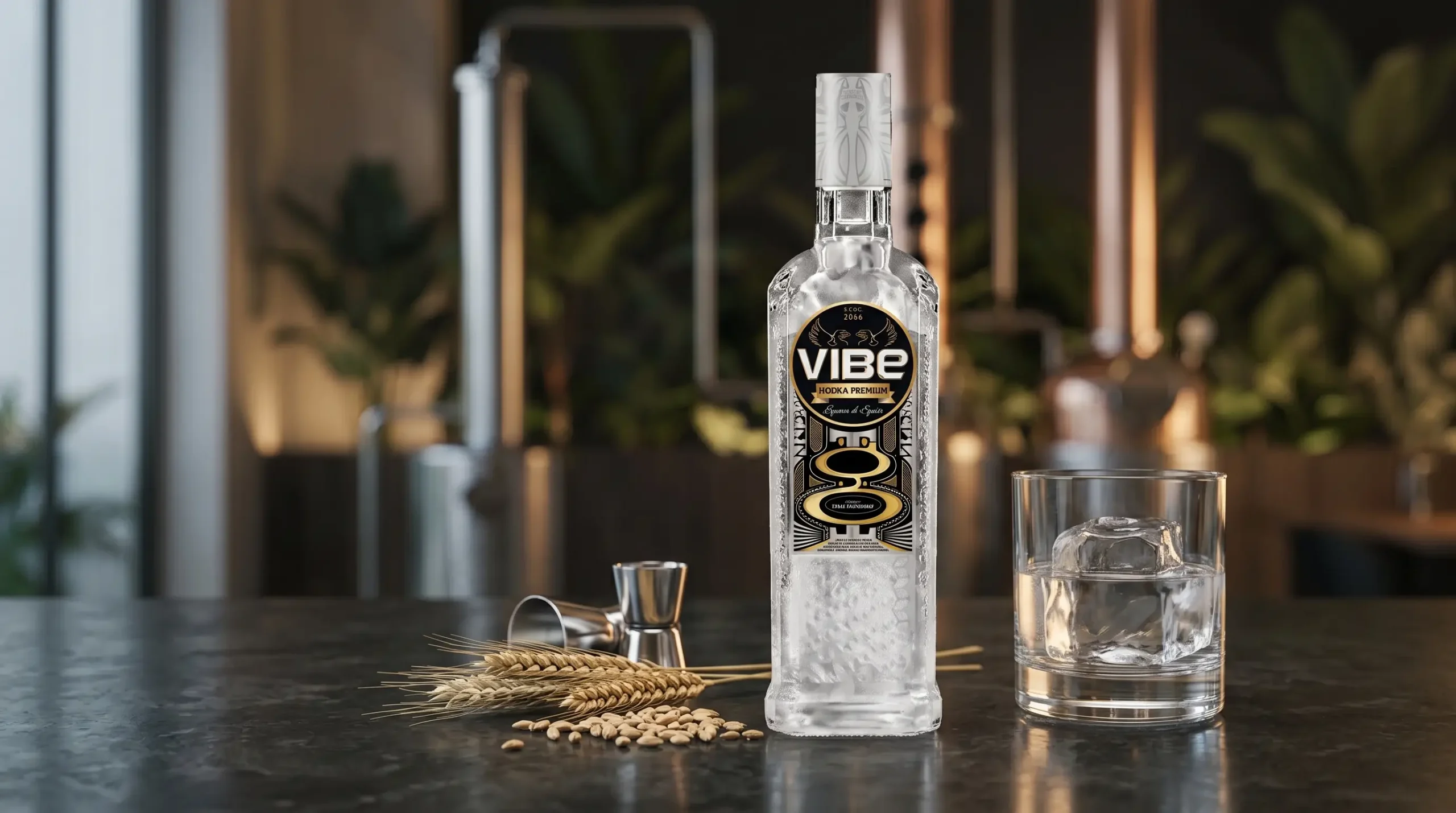
As one of Indonesia’s local alcohol producers, Vibe’s achievements in various prestigious global competitions such as the Ultimate Spirits Challenge (USC) or other international spirit competitions are a strong indicator that domestic distillation techniques have met world-class standards of excellence. Through its product lineup, such as Vibe Vodka and Vibe Vodka Premium, it is clear how the domestic industry is now capable of establishing strict quality controls and competing very competitively with multinational brands.
Can Vodka from Cassava Be Called Local Vodka?
The classification of “local” often requires a more detailed understanding. Does the word “local” refer to the origin of the planted crop, the location where distillation takes place, or simply a brand registered in Indonesia?
If a spirit product is distilled, processed, and packaged domestically using raw materials that are also harvested from Indonesian farms (such as cassava or sweet potatoes), the product fully meets the criteria as an entirely local Indonesian spirit.
However, regulations regarding product definitions, licensing, and quality standards for alcoholic beverages in Indonesia are strictly regulated by official agencies such as BPOM (Food and Drug Supervisory Agency). Therefore, specific claims regarding a beverage’s category always refer to the distribution permits and official classifications approved by the government.
Cassava vs. Potato vs. Wheat as Spirit Raw Materials
To make it easier to understand the position of cassava and sweet potatoes, the following table compares the main characteristics of several raw materials often used in the vodka production process:
| Raw Material | Main Characteristics | Relevant Content | Role in Production |
| Cassava | Starchy material | Starch | Carbohydrate source that can be processed for fermentation |
| Sweet Potato | Starchy material | Starch | Carbohydrate source for the fermentation process |
| Potato | Starchy tuber | Starch | One of the traditional raw materials for classic vodka |
| Wheat | Cereal / Grains | Starch | Commonly used to produce modern spirits |
The table above is informative and does not imply that one type of raw material automatically produces a superior product compared to other materials. Final quality relies on production execution.
Does the Raw Material Determine Vodka Quality?
A frequently mistaken understanding among the public is the assumption that vodka quality is solely determined by the basic ingredients used. In fact, product quality cannot be determined from just a single factor alone.
Superior raw materials indeed provide a good foundation, but the post-harvest stages are much more crucial. Some quality-determining factors include:
- The quality and cleanliness of the fermentation process.
- The design and technology of the distillation equipment (column still or pot still).
- Precision in cutting the distillation results (separating pure alcohol from unwanted compounds).
- A precise filtration and purification system.
- The purity of the water used to lower the alcohol content.
- Quality control in every production batch.
The label “made from local ingredients” is not an automatic synonym for a “better” or “worse” product. Everything depends heavily on the professionalism of the master distiller and the industrial technology standards applied by the factory.
A New Era for Indonesian Local Spirits
The growing utilization of raw materials like cassava and sweet potatoes is clear evidence that the domestic spirit industry continues to make brilliant innovations. This exploration of Archipelago commodities not only breaks the stigma that high-quality vodka must come from imported wheat or potatoes, but it also opens vast potential for local agriculture to compete in the global market.
To experience firsthand the excellence of domestic distillation, Vibe Liqueur & Spirits serves as a representation of premium quality. As a pioneer of local Indonesian alcoholic beverages that has won various international awards, Vibe proves that the nation’s proud products can stand on par with multinational brands.
More than just a neutral spirit, Vibe Liqueur & Spirits offers a highly comprehensive product lineup. There are various innovative flavor variants with varying alcohol content percentages, providing high flexibility for mixologists and casual drinkers alike to mix various special cocktail recipes.
To complete the experience of enjoying quality servings, don’t forget to visit the Wekendvibe platform. Find various recommendations for the most interesting venues to visit, cocktail recipe guides you can try at home, and a variety of other unique information regarding modern lifestyles. Let’s continue to support the progress of local industries and enjoy every celebration wisely and responsibly.
FAQ (Frequently Asked Questions)
1. Can vodka be made from cassava?
Yes, vodka can be made from cassava. Cassava is a plant rich in starch, where the starch can be converted into sugar and fermented into alcohol, to then be distilled into a spirit.
2. Can vodka be made from sweet potatoes?
Yes. Similar to cassava, sweet potatoes are also starchy agricultural commodities that can be processed through the stages of sugar conversion, fermentation, and distillation.
3. Why can cassava be used as a raw material for alcohol?
Cassava can be used because it has a high content of complex carbohydrates (starch). Once this starch is broken down with the help of enzymes, it turns into simple sugars that become food for yeast to produce alcohol.
4. How is cassava starch converted into alcohol?
The process includes heating the raw materials, adding enzymes to break down starch into sugar (saccharification), adding yeast for the fermentation process, and concluding with distillation to purify the alcohol.
5. Does cassava vodka taste different?
Technically, vodka is a neutral beverage. However, cassava raw materials can provide a slightly rounder mouthfeel profile or very subtle trace flavors, depending on the producer’s purification process.
6. What raw materials can be used to make vodka?
Almost all agricultural commodities containing starch or sugar can be used. This includes potatoes, wheat, corn, grapes, sugarcane (molasses), as well as cassava and sweet potatoes.
7. What is the difference between vodka from cassava, potatoes, and wheat?
The difference lies in the type of agricultural raw material that contributes starch for fermentation. All three can impart slightly different microscopic texture nuances to the final product, even after going through high-level distillation processes.
8. Are all Indonesian local vodkas made from local ingredients?
Not all. The use of raw materials heavily depends on the producer’s formula. Some local brands use local ingredients like cassava or molasses, while others might use imported base spirits.