 Log in
 Register



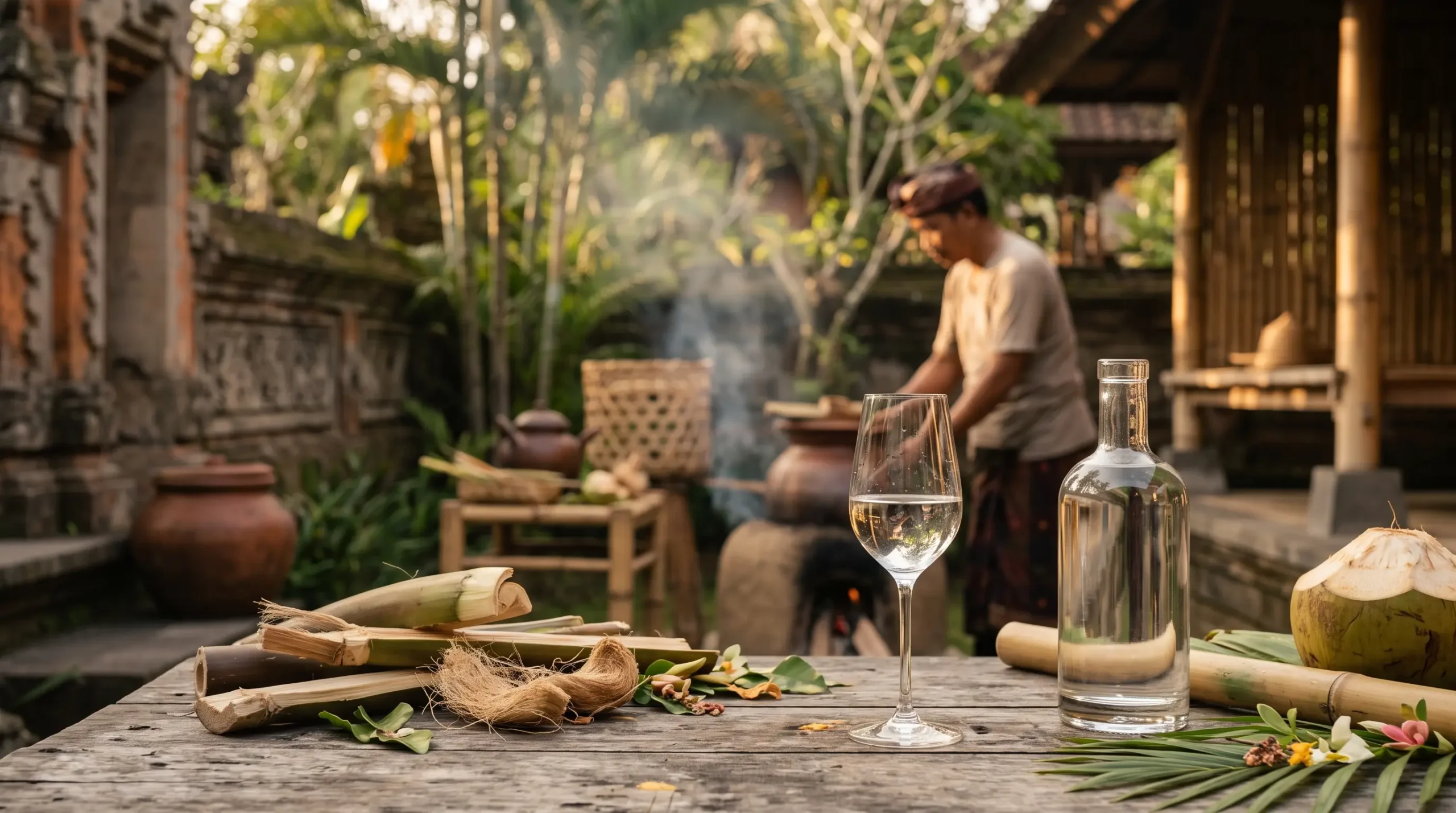
Many people who are just getting to know the culture of the Island of the Gods often ask, what is arak Bali? In short, arak Bali is a traditional distilled alcoholic beverage (spirit) that is deeply intertwined with the culture, rituals, and social life of the Balinese people. Understanding this local spirit goes beyond just talking about liquor; it is an exploration of local wisdom passed down through generations. The taste profile and alcohol content of arak Bali can vary greatly depending on the natural ingredients used and the distillation methods of each local maker.
What Is Arak Bali?
In the context of local culture and gastronomy, the question of what is arak Bali can be answered by defining it as a traditional distilled spirit made from the fermented sweet sap of palm trees.
Arak Bali is an inseparable part of local tradition. Categorically, this beverage falls under the distilled spirits family, which distinguishes it from regular fermented drinks. If the fermented palm sap is left to age, it becomes tuak (palm wine). However, when that tuak is heated and its vapor is captured back into a liquid, this clear liquid is what is known as arak. Geographical identity is crucial here; traditional Balinese arak has unique characteristics heavily influenced by the climate, soil, and specific skills of local artisans in various regions across Bali, such as Karangasem and Buleleng.
What Is Arak Bali Made Of?
The ingredients for arak Bali rely entirely on the natural resources surrounding the distillation site. Historically and traditionally, authentic arak is made from the sweet sap (nira) tapped from several types of palm trees, including:
- Coconut Palm (Cocos nucifera): Very commonly used in various coastal and lowland areas.
- Sugar Palm / Aren (Arenga pinnata): Yields a flavor profile that is often considered deeper and more complex.
- Palmyra Palm / Lontar (Borassus flabellifer): Mostly found in drier regions like eastern and northern Bali (e.g., Karangasem and Buleleng).
Each type of sap provides a distinct base profile. Therefore, we cannot assume that all of these traditional Balinese beverages are made from a single, uniform ingredient.
How Is Arak Bali Made Traditionally?
The production of traditional arak Bali involves immense dedication, time, and local expertise. At a high level, the general process includes the following steps:
- Tapping the Sap: Farmers tap the sweet sap from the flower clusters of coconut, sugar, or palmyra palms in the morning or late afternoon.
- Fermentation (Into Tuak): The fresh sap is then left to ferment naturally using wild yeast (or with added coconut husks/specific woods) for several days until the sugar converts into alcohol, producing a liquid called tuak.
- Distillation: The mature tuak is poured into a traditional distillation apparatus (often made from bamboo and clay or copper pots). Through heating, the alcohol evaporates before the water, travels through a bamboo pipe, and condenses back into a clear liquid. This liquid is the arak.
- Collection and Storage: The distilled spirit is collected and sometimes rested to smoothen its flavor before being packaged or consumed.
What Does Arak Bali Taste Like?
Because it is produced on a craft scale using natural ingredients, the taste of arak Bali is highly dynamic and rich. Generally, beverage experts describe the tasting notes of arak Bali with the following sensory vocabulary:
- Earthy & Herbal: There are traces of earthiness or natural leaves resulting from the fermentation of the sap and the use of traditional vessels.
- Smoky & Warm: A subtle smoky aroma often appears due to the distillation process using firewood, delivering a warm sensation down the throat.
- Sweet & Floral: If high-quality palmyra or sugar palm sap is used, the arak can retain a lingering sweet note and a floral palm aroma.
- Dry & Clean: Higher-level distillation usually produces an arak that feels drier on the palate with a clean finish.
The taste is never uniform; a bottle from Karangasem might taste entirely different from a bottle from Buleleng.
What Is the Alcohol Content of Arak Bali?
Many people wonder about the alcohol content of arak Bali. The Alcohol by Volume (ABV) in traditional arak varies widely because the distillation process is done manually without factory-grade measuring instruments.
Generally, the alcohol content of arak Bali ranges from 15% to 40%, and can even reach 50% for premium quality batches (often called arak api or “fire arak” because it catches fire if ignited).
- First distillation: Usually has a lower alcohol content.
- Double distillation or high precision: Produces a crystal-clear spirit with a high ABV.
It is important to note that modern arak products legally sold in the market are typically standardized and display an exact ABV figure (e.g., 35% or 40%) on their bottle labels.
Arak Bali in Local Culture and Tradition
Understanding what is arak Bali is incomplete without looking at its social and spiritual functions. In Balinese culture, arak is not merely a drink to unwind; it is a cultural entity.
- Rituals and Religion: Arak, along with brem (rice wine) and tuak, is frequently used in Balinese Hindu ceremonies as tetabuhan (offerings poured onto the ground). This ritual aims to harmonize nature and appease the Bhuta Kala (lower energies/spirits).
- Traditional Medicine: Historically, locals used arak in usadha (Balinese traditional medicine) mixtures to warm the body or treat certain topical ailments.
- Social Bonding: Arak is a symbol of togetherness (menyame braya) when adults gather to prepare for communal ceremonies (ngayah) or simply discuss community matters at the banjar.
How Do Locals Enjoy Arak?
Traditionally, locals enjoy arak in a communal setting, not for unrestrained intoxication.
- The Megibung/Metajen Tradition: Arak is often served in small shot glasses and passed around alternately among adult residents during gatherings.
- Arak Madu (Arak with Honey): The most popular and classic way to enjoy arak is by mixing it with pure honey and a squeeze of fresh lime.
- Cocktail Evolution: In the modern era, mixologists in various hotels and bars across Bali have started elevating arak as a base spirit for international-standard cocktails, mixing it with local spice syrups or tropical fruit extracts.
Traditional Arak Bali vs. Modern Arak Bali
Over time, arak Bali has evolved. Traditional arak Bali is generally produced in farmers’ backyards using bamboo tools, packaged in recycled bottles, and quality can vary between batches.
Meanwhile, modern arak Bali refers to commercial products that have been certified by BPOM (the Indonesian FDA) and carry excise stamps. These modern products offer strict production consistency, laboratory quality control, standardized alcohol content, and elegant glass bottle packaging. Both traditional and modern products have their own roles; one preserves rustic village authenticity, while the other elevates the economic value of local spirits to the global market.
Arak Bali Amidst the Modern Indonesian Craft Spirit Wave
The modern transformation of Balinese arak reflects the broader revival of Indonesia’s local alcohol industry. Today, the Indonesian beverage market is no longer driven solely by imported products. Instead, a significant wave of craft spirit innovation is emerging from local producers across the country.
From the revival of regional spirits such as Cap Tikus, to the introduction of gin infused with distinctive Indonesian botanicals and spices, and the rise of modern premium liqueur and spirit brands such as VIBE Liqueur & Spirits, locally produced beverages are increasingly making their mark across Indonesia’s hospitality and nightlife scenes.
As a prime example of how local brands can compete on the global stage, VIBE is among the pioneers demonstrating that Indonesian distilling quality has gained international recognition. This is reflected in its achievements at prestigious international competitions, including the Ultimate Spirits Challenge (USC) 2020, Asia International Spirits Competition 2019, The Liqueur Masters Asia 2019, The World Gin Masters Asia 2019, and Asia World Spirits Competition 2026. Its standout products, ranging from VIBE Vodka, Rum, and Gin to mixologist favourites such as VIBE Black Tea and VIBE Exotic Lychee, demonstrate a consistent commitment to flavour innovation.
The growing presence of award-winning, legally produced domestic beverages is setting a new benchmark for the industry. It demonstrates that Indonesian spirits, whether rooted in traditional heritage like Balinese arak or inspired by modern mixology, can meet global quality standards and stand alongside international spirits brands.
Why Is Arak Bali Gaining Popularity?
The popularity of arak Bali has skyrocketed over the past decade. Several supporting factors include:
- Local Government Regulations: Through the Bali Governor’s Regulation, the existence of arak is recognized, protected, and its trade is regulated, thereby elevating the status of arak farmers.
- Hospitality & Cocktail Culture: Tourism growth pushes bartenders to seek local spirits. Arak now proudly sits alongside vodka, rum, and gin in premium bars.
- Intangible Cultural Heritage: In 2022, the Indonesian Ministry of Education, Culture, Research, and Technology designated Arak Bali as an Intangible Cultural Heritage (WBTb) of Indonesia.
How to Understand Arak Bali More Objectively
If you want to get to know and taste this traditional Balinese spirit, here is an educational checklist for you:
- Know the origin: Is it from Karangasem, Buleleng, or another region?
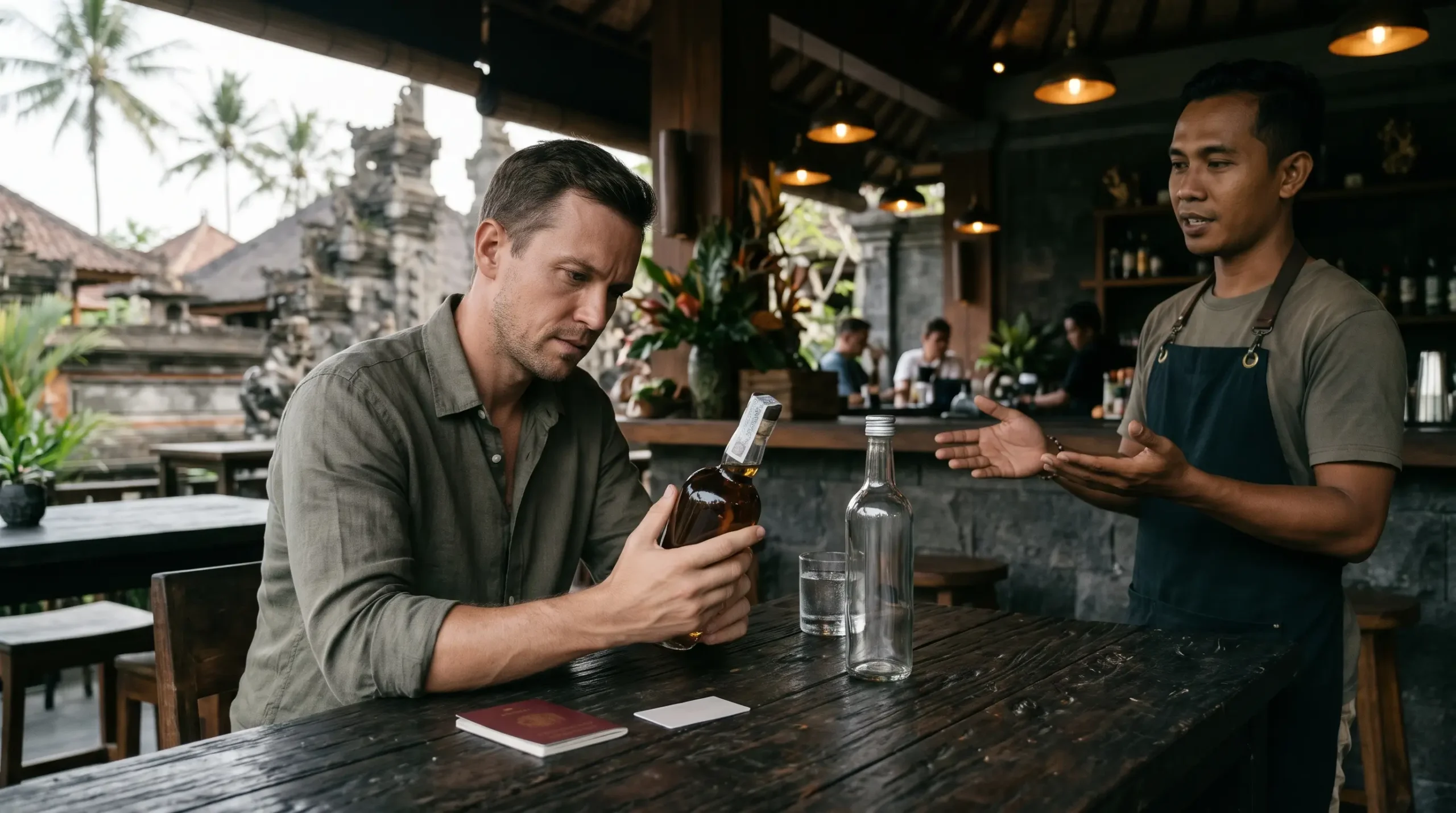
- Check the label: For commercial products, clearly read the ingredients and legality (excise stamp/BPOM).
- Note the alcohol content/ABV: Know exactly how strong the beverage you are consuming is.
- Differentiate traditional vs. commercial: Understand that traditional arak might have a “wilder” and earthier taste compared to the smoother, factory-made arak.
- Understand the cultural context: Remember that arak holds sacred and historical value for the Balinese people.
- Consume responsibly: Enjoy arak to appreciate its flavor and culture, not for excessive consumption, and strictly adhere to the legal drinking age.
From Tradition to Innovation: Celebrating Local Spirits
Knowing exactly what is arak Bali gives us a new perspective on how a local cultural tradition can survive and evolve in the modern era. This beverage is not just a relic of the past, but a strong foundation for the archipelago’s rapidly growing craft spirit industry.
If you are interested in exploring further the potential of Indonesia’s beverage industry, you must try the innovations from ibe Liqueur & Spirits. As a modern Indonesian local alcohol brand that has won various international awards, VIBE delivers premium quality through a wide range of flavor variants with varying alcohol contents. The diverse flavor profiles from VIBE make them incredibly versatile and perfect for mixing into your favorite cocktail recipes.
For more inspiration, visit Wekendvibe, a premier lifestyle portal that provides the latest information on nightlife venue reviews, home and professional cocktail recipes, and a variety of other unique insights that will perfectly complete your weekend.
FAQ
1. What is arak Bali? Arak Bali is a traditional alcoholic beverage native to Bali, produced through the distillation process of fermented coconut, palmyra, or sugar palm sap.
2. What is arak Bali made of? The main ingredient of arak Bali is the sweet sap (nira) tapped from palm trees, most commonly from the coconut palm (Cocos nucifera), palmyra palm (Borassus flabellifer), or sugar palm (Arenga pinnata).
3. What is the alcohol content of arak Bali? The alcohol content varies, generally ranging from 15% to 40%. Some specifically distilled traditional araks (arak api) can reach up to 50% ABV. Commercial arak usually has a standardized ABV, such as 35% or 40%.
4. What does arak Bali taste like? The taste of arak Bali is often described as earthy, herbal, and warm, sometimes with smoky and floral hints, depending heavily on the type of palm sap and the distillation technique used.
5. Arak Bali vs Tuak: What is the difference? Tuak is a fermented palm sap beverage with a sweet-sour taste and low alcohol content. Arak, on the other hand, is the distilled product of that tuak, resulting in a clear liquid with a significantly higher alcohol content.
6. How is arak Bali used in Balinese culture? Besides being consumed during social gatherings, arak is used as tetabuhan (an offering poured to the ground) in Balinese Hindu ceremonies to harmonize nature, and it is also historically used in traditional medicinal practices.
7. Does all arak Bali have the same alcohol content? No. The alcohol content of traditional arak Bali depends heavily on the number of distillation processes and the maker’s technique. Only modern/commercial arak Bali (with excise stamps) has an exact alcohol content as stated on its label.
8. Why is arak Bali considered a part of Balinese tradition? Because its production methods have been passed down through generations, and its existence is inseparable from religious rituals (as ceremonial paraphernalia), social structures, and the agrarian culture of the Balinese people.
9. What is the difference between traditional arak Bali and modern arak products? Traditional arak is produced in farmers’ homes without precise alcohol measurements, offering a more rustic flavor. Modern arak is mass-produced with precision machinery, possesses legal permits (BPOM/Excise), is packaged to international standards, and maintains consistent quality control.